WORLD FAMOUS ★ BROKEN ART TATTOO ★ ATWATER VILLAGE • LOS ANGELES ★ SINCE 2005 ★ WALK-INS WELCOME ★ COVER-UP SPECIALISTS ★ WORLD FAMOUS ★ BROKEN ART TATTOO ★ SINCE 2005
I started tattooing in a real street shop in the early ’90s in Monterey, California. College town. Military town. Tourists. Punk rock. Skate rats and surf bums. Gangsters rolling in from Salinas and Seaside. Drunk sailors. First-timers. Old bikers. Homeless friends selling soapstone carvings to buy their one meal of the day. Hustlers popping in to sell a stolen stereo. Fancy Carmel ladies coming in for their first tattoo. It was absolute chaos — and I loved it.
And if someone walked in wanting a particular style of tattoo, you figured out how to do it. That was tattooing. Not curated studios. Not appointment-only ego temples. Not artists hiding behind “that’s not my style.”
The early days of tattooing were different — raw, restless, alive in a way you don’t realize until years later when you’re looking back through the haze of time and ink. We built our machines by hand, tuned them until they sang just right, and every Monday we sat down making needles for the week ahead, little piles of steel and anticipation lined up like promises. We painted flash late into the night and covered the walls with it — bright, loud, hungry artwork waiting for the next walk-in to point and say that one. Every once in a while somebody would spring for a tattoo magazine, and we’d pass it around like contraband, flipping through pages worn thin, finding a few killer tattoos that made us push a little harder, draw a little better, reach just past what we thought we could do. Weekends were chaos — a line out the door, tourists, punks, sailors, drunks, dreamers — everybody wanting to leave with a story on their skin. Weekdays slowed down just enough to breathe; we’d sit around painting, tuning machines, picking guitars, talking about art and life like we had all the time in the world. After closing we’d drift down to the dive bars on Lighthouse Avenue, beers in hand, pool cues leaning against the wall, talking big dreams and small victories under neon lights. Looking back now, I didn’t realize how honest and authentic those days really were — no branding, no hype, just craft and hunger. Those years lit a fire in me, the kind that pushed me to chase the art as far as it would go and never stop trying to become better at it.
Portraits? Try it. Japanese? Try it. Black & grey? Do it. Cover-ups? Figure it out. Lettering, flash, custom pieces — whatever walked in.
I also had a young family. Rent was due. I couldn’t afford to let tattoos walk out the door because I didn’t do that style. But honestly? Even without the pressure, I wanted to learn everything.
Tattooing is too good a craft to stay small. So I chased every style I could, pursuing the great calling of TATTOO. And that’s what I want to talk about today.
Tattooing Isn’t About One Style
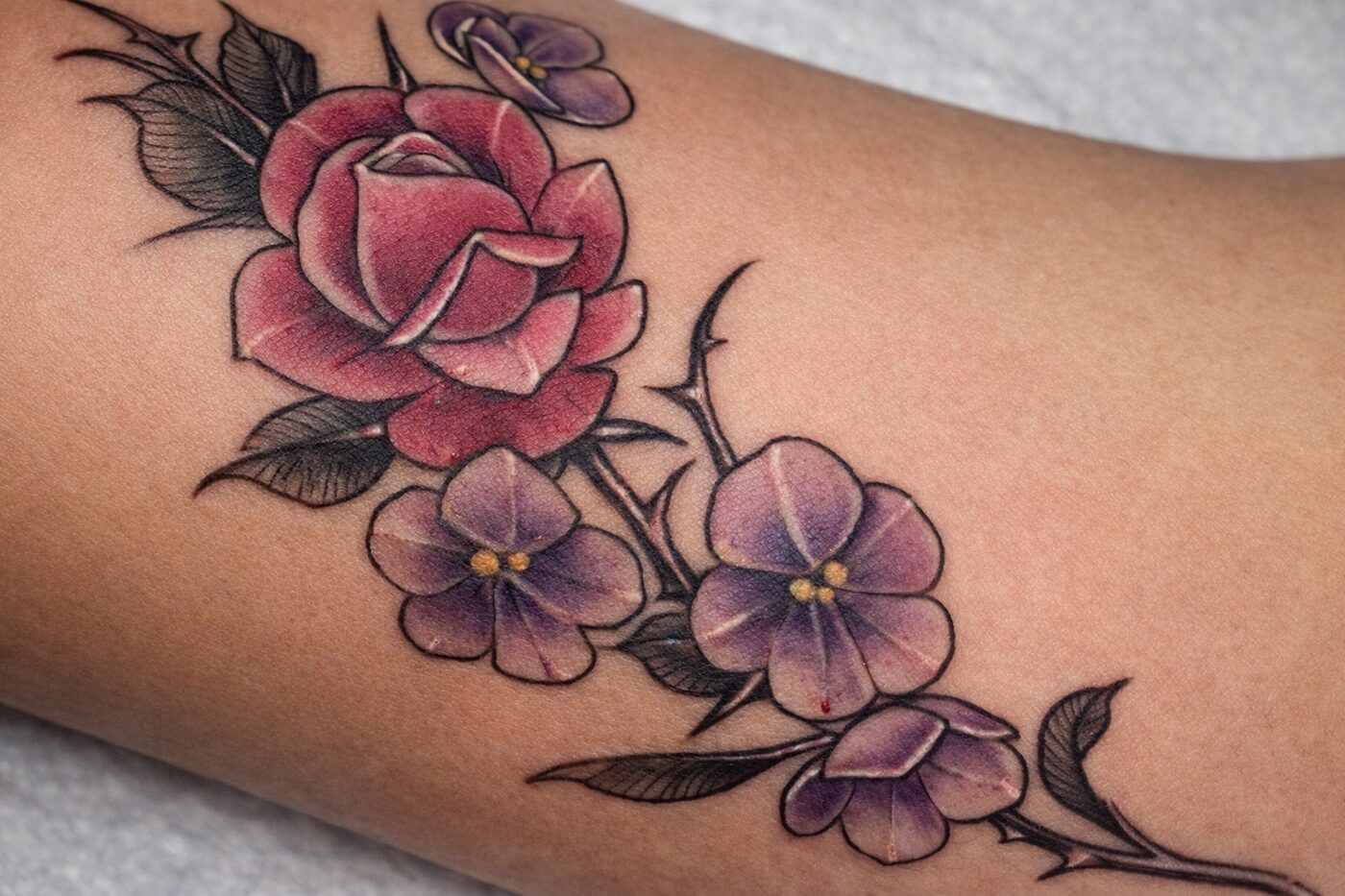
A young mother comes in and wants a simple, delicate tattoo to represent her children. Their birth flowers are coupled together in a complementary way — and she loves the work!
Birth flowers for her children
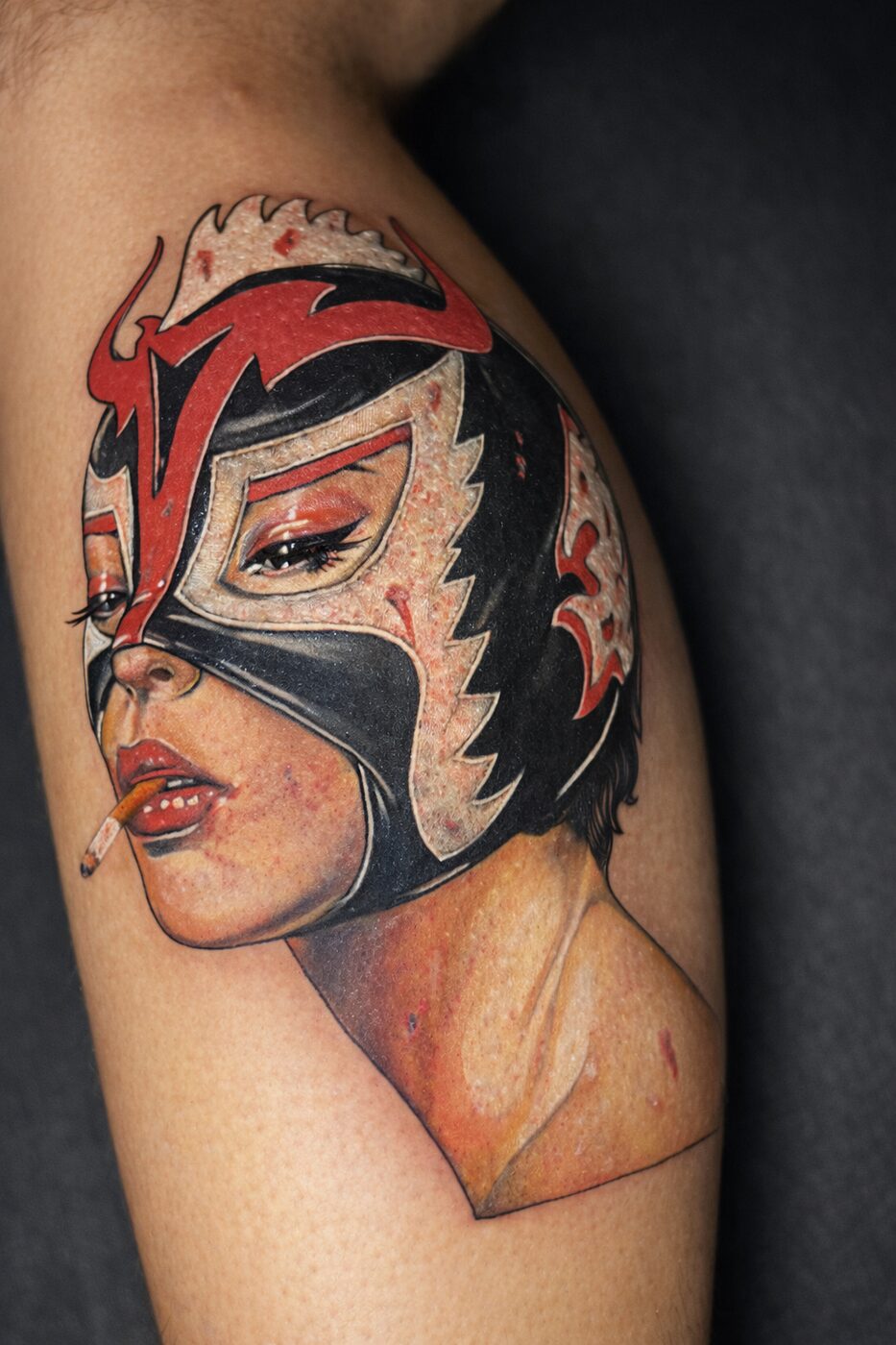
Any tattoo can walk through that door. What’s next? This guy wants a sexy, smoking lady wearing a luchador mask. I got this!
Luchador lady, color realism
It’s About the Person in the Chair
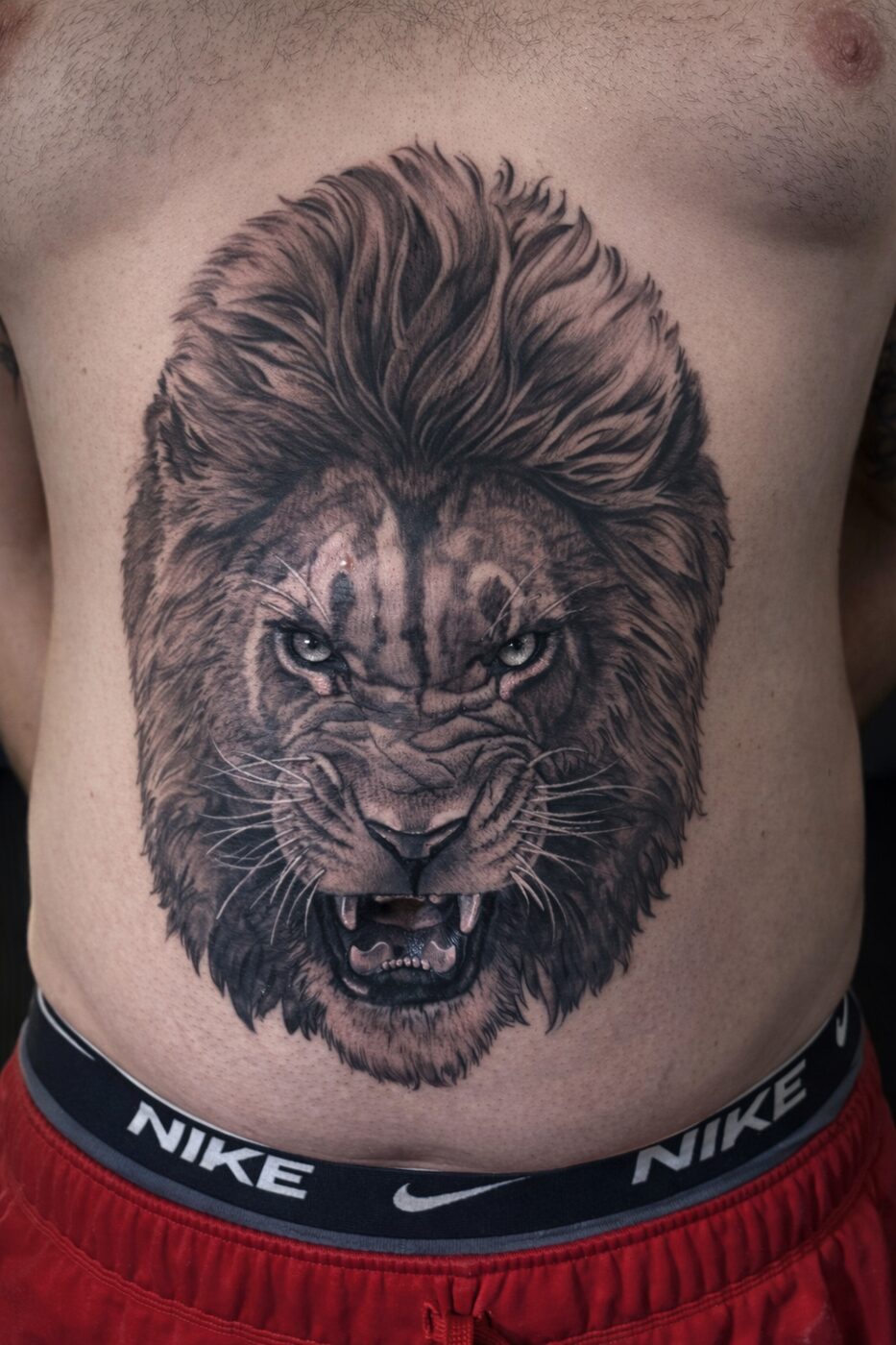
If you actually work a street shop long enough, you realize: tattooing isn’t about the artist. It’s about the person in the chair. Knowing how to adapt a tattoo to their personal aesthetic is very important to me. I had a guy who wanted to start an entire black and grey full frontal, so we started with this lion’s head. Gentle details and high-contrast shading — and the result is stunning!
Black & grey lion — the start of a full frontal
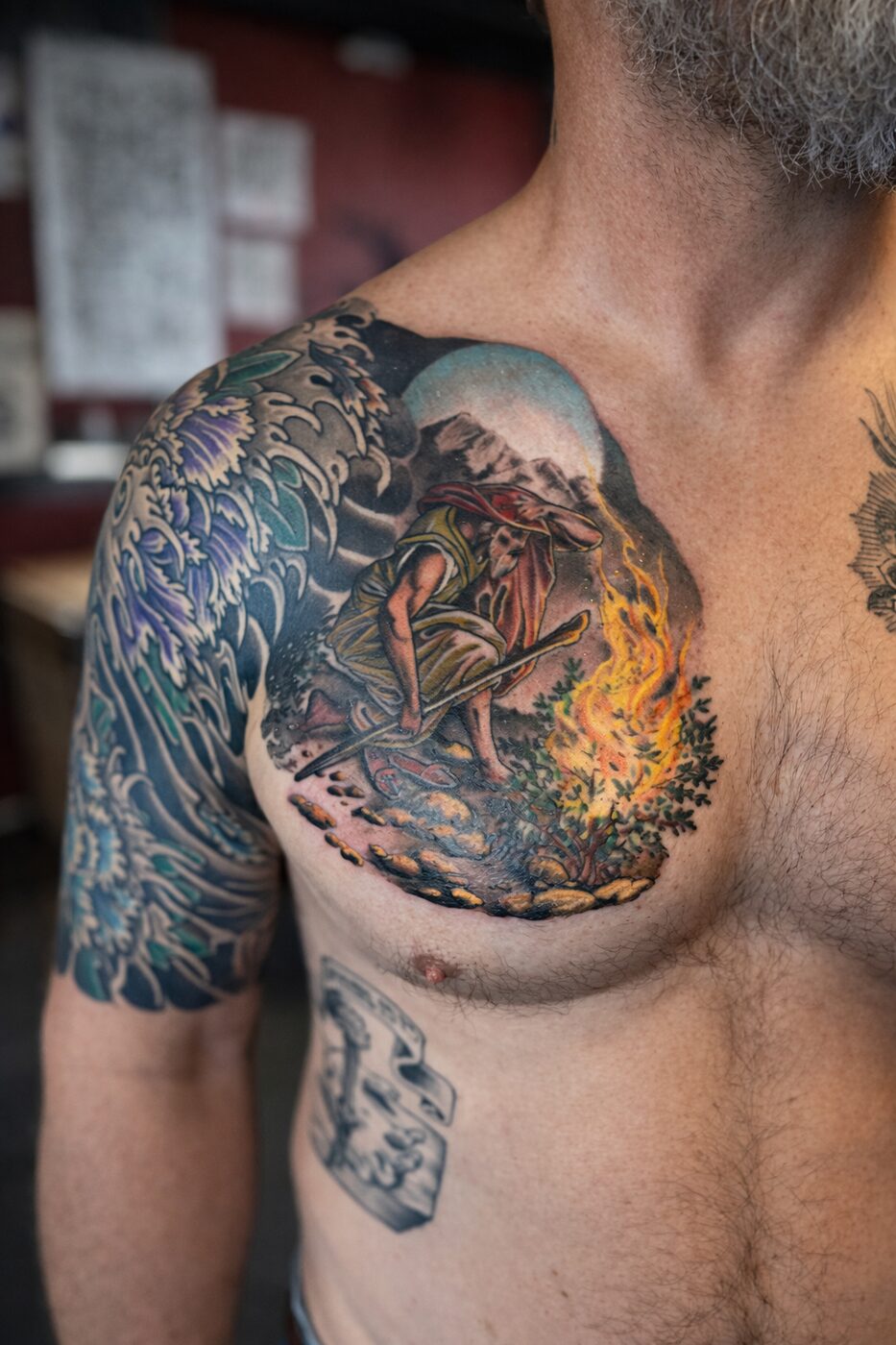
Different personalities. Different cultures. First tattoos. Memorial pieces. Street shops are the wild card for a young artist. What if someone comes in asking for one of their favorite Bible stories? Moses and the burning bush, done in an illustrative-realism hybrid. What a fun tattoo to create and execute.
Moses and the burning bush — illustrative realism
Large-Scale Work
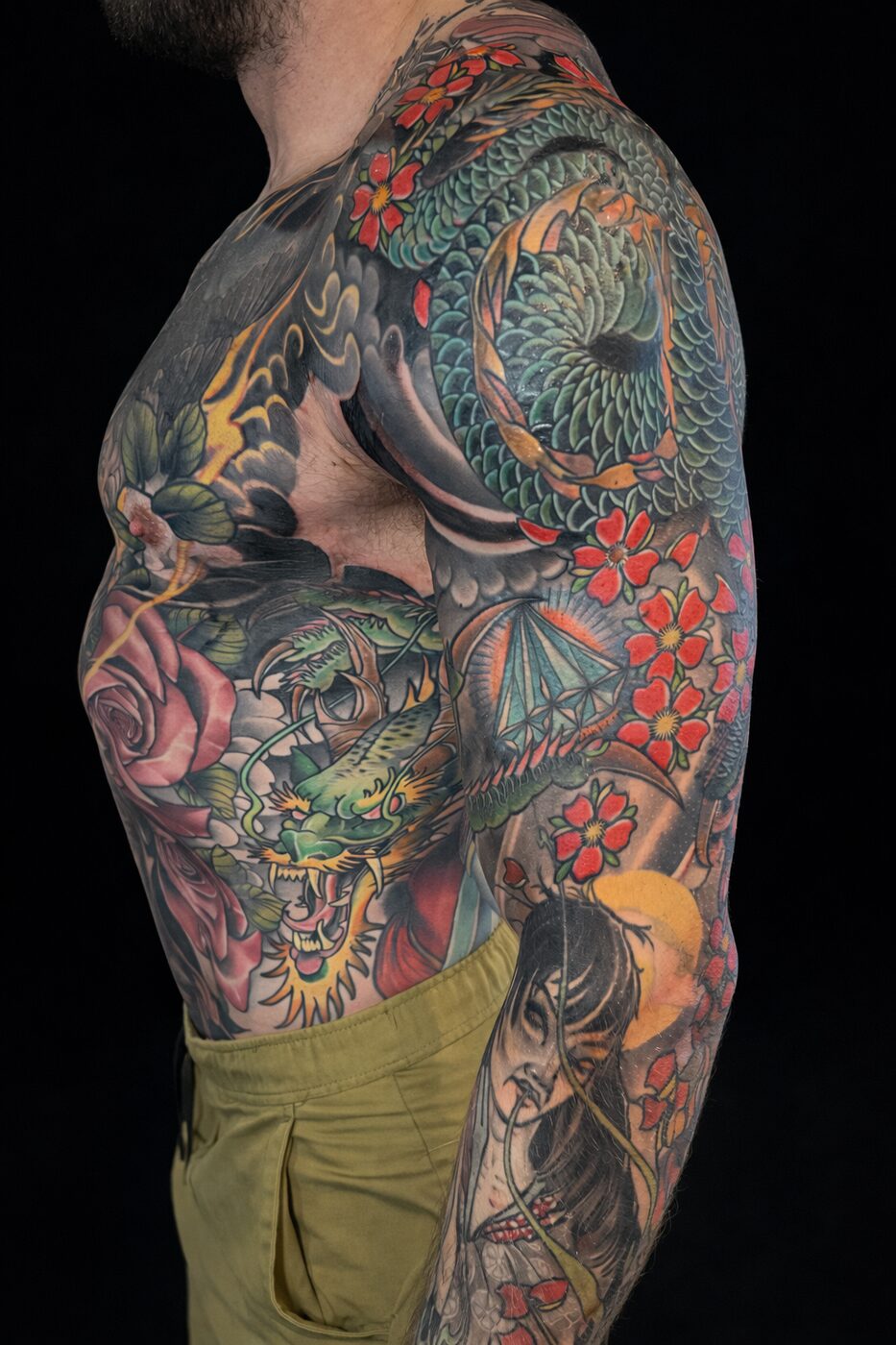
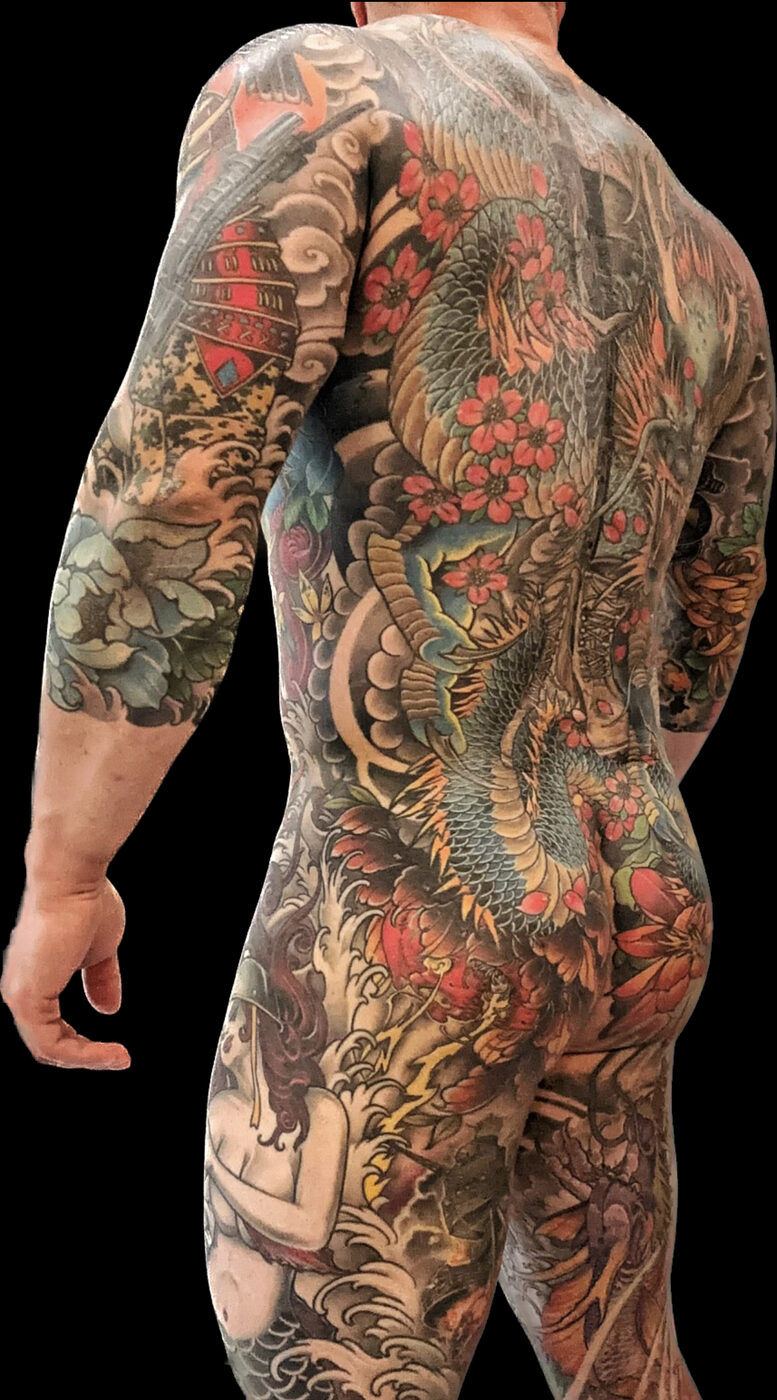
Nervous first-timers. Lifelong collectors. Emotional memorial pieces. Drunk tourists you have to calmly talk down from tattooing their girlfriend’s name. But some of my favorite tattooing is the big stuff — full sleeves that expand into full backs and fronts, and then the legs. Large-scale tattooing is so fun, and it takes decades of experience to know how things should be laid out. Here are a few:
A color Japanese sleeve up close
That’s what a street shop teaches you: stay ready for anything, respect the person in the chair, and never stop chasing the craft. It’s the reason I can tattoo almost anything that walks through our doors at Broken Art Tattoo today. Got a piece in mind? Browse our artists or text 323-612-7886.
November 12, 2025
Bird Tattoos: Freedom, Flight, and the Stories They Carry
Why I Love Tattooing Birds
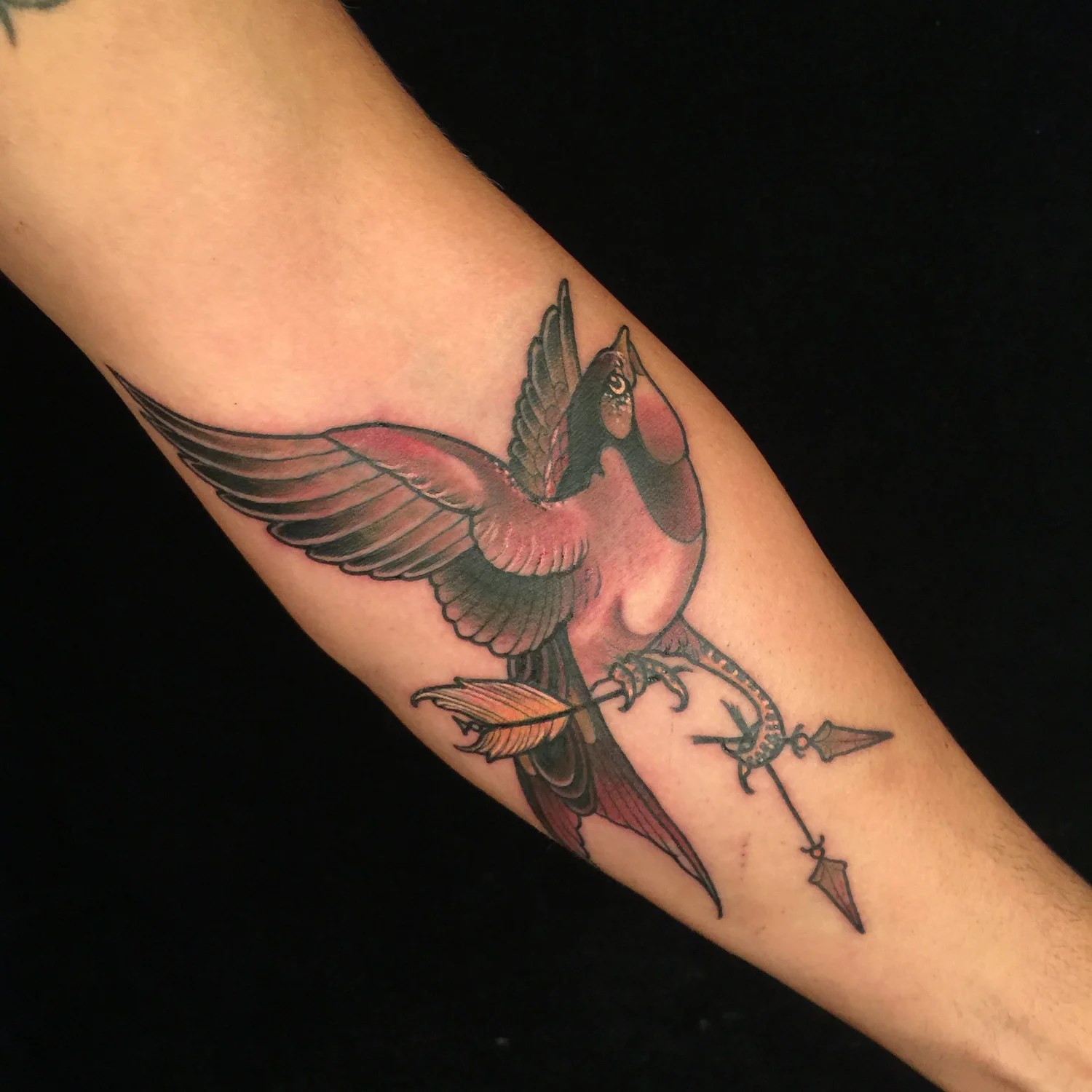
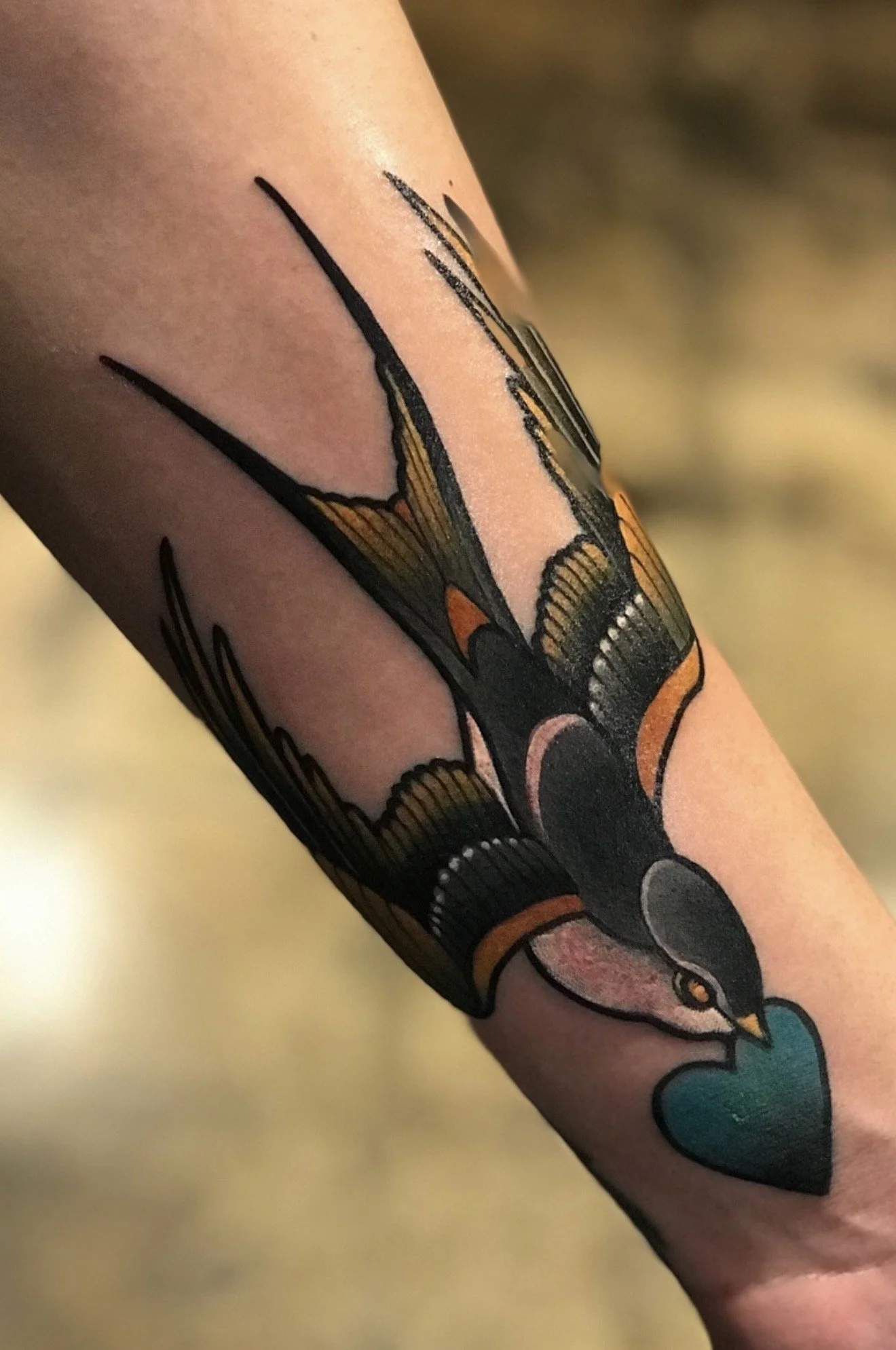
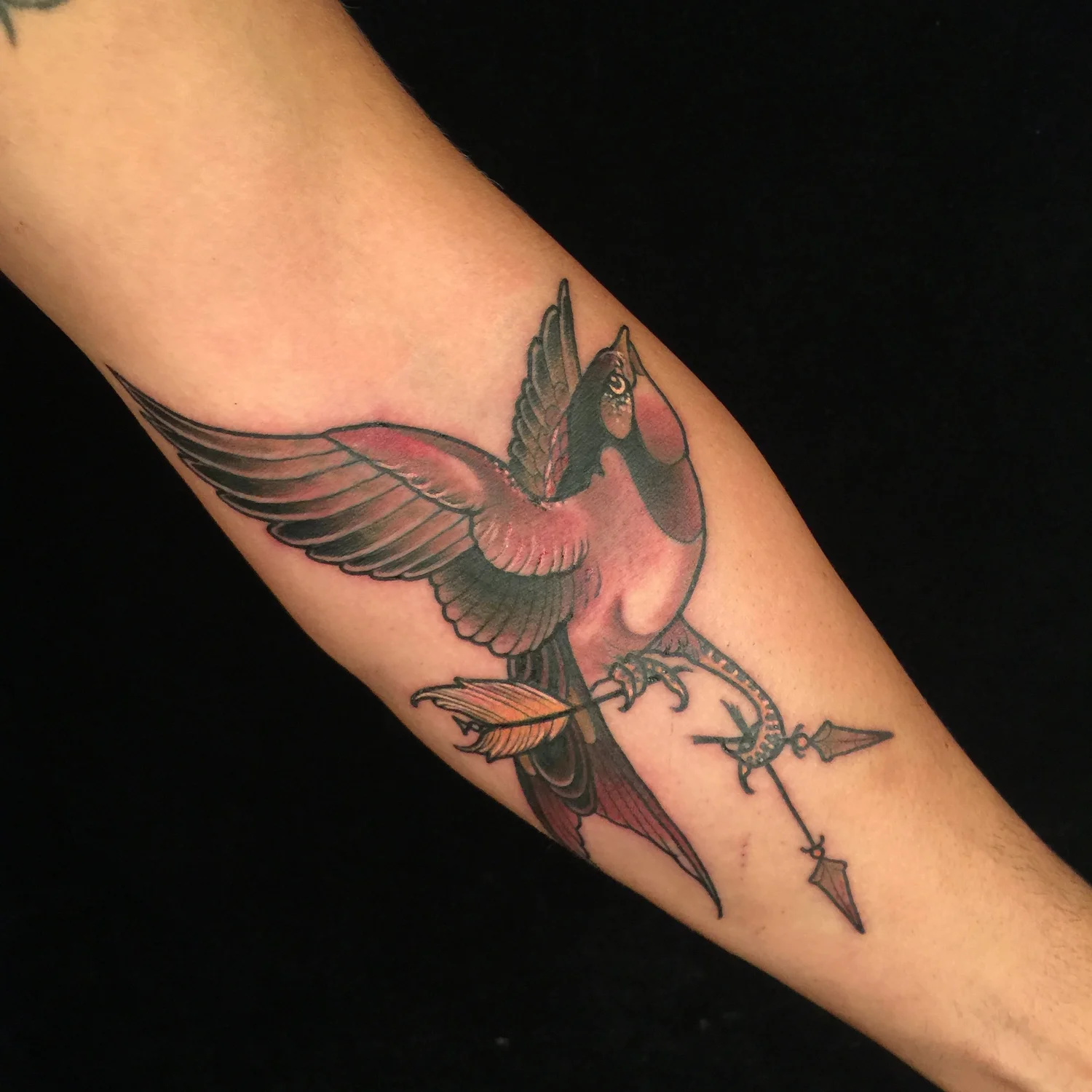
Neotraditional swallow with arrows
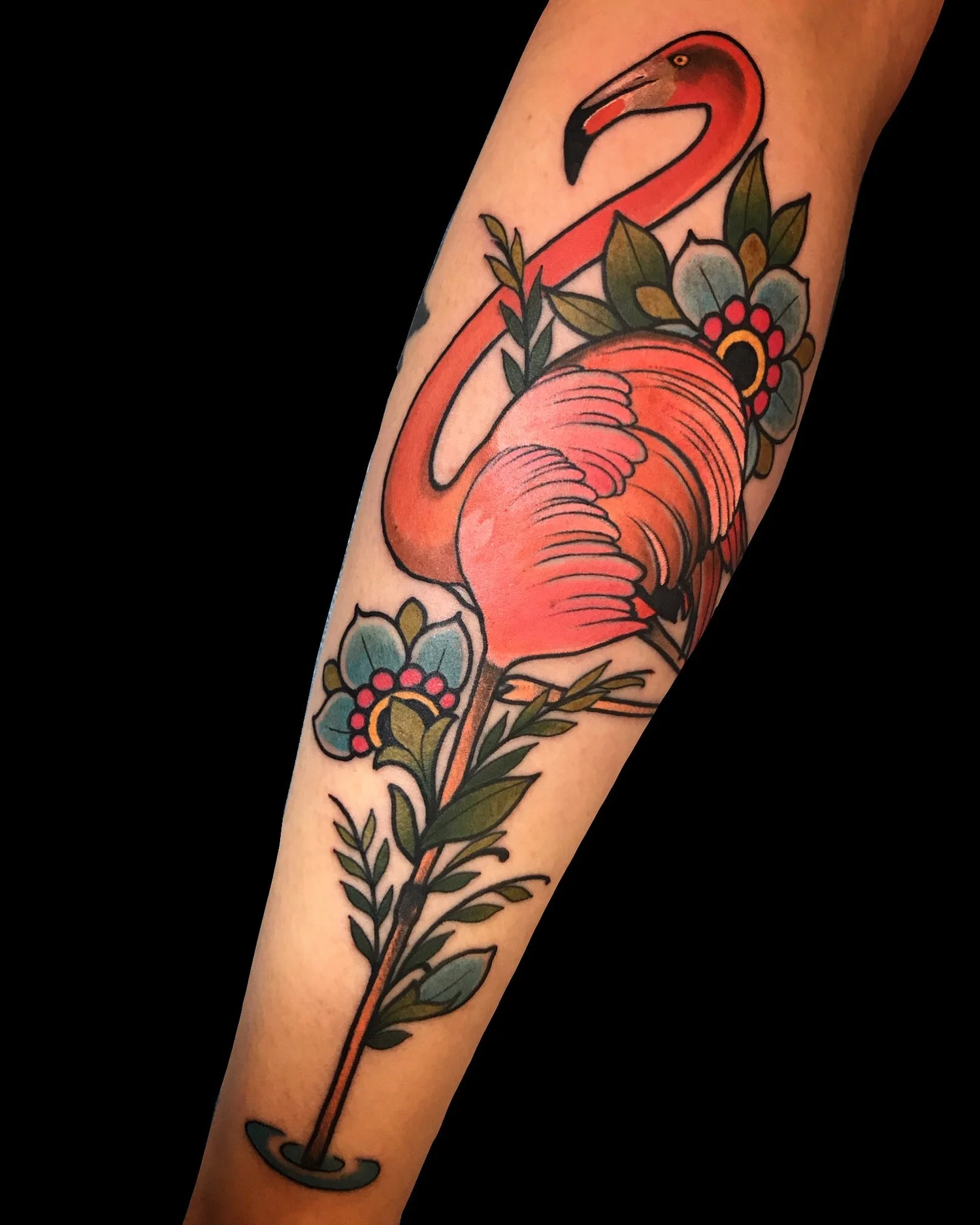
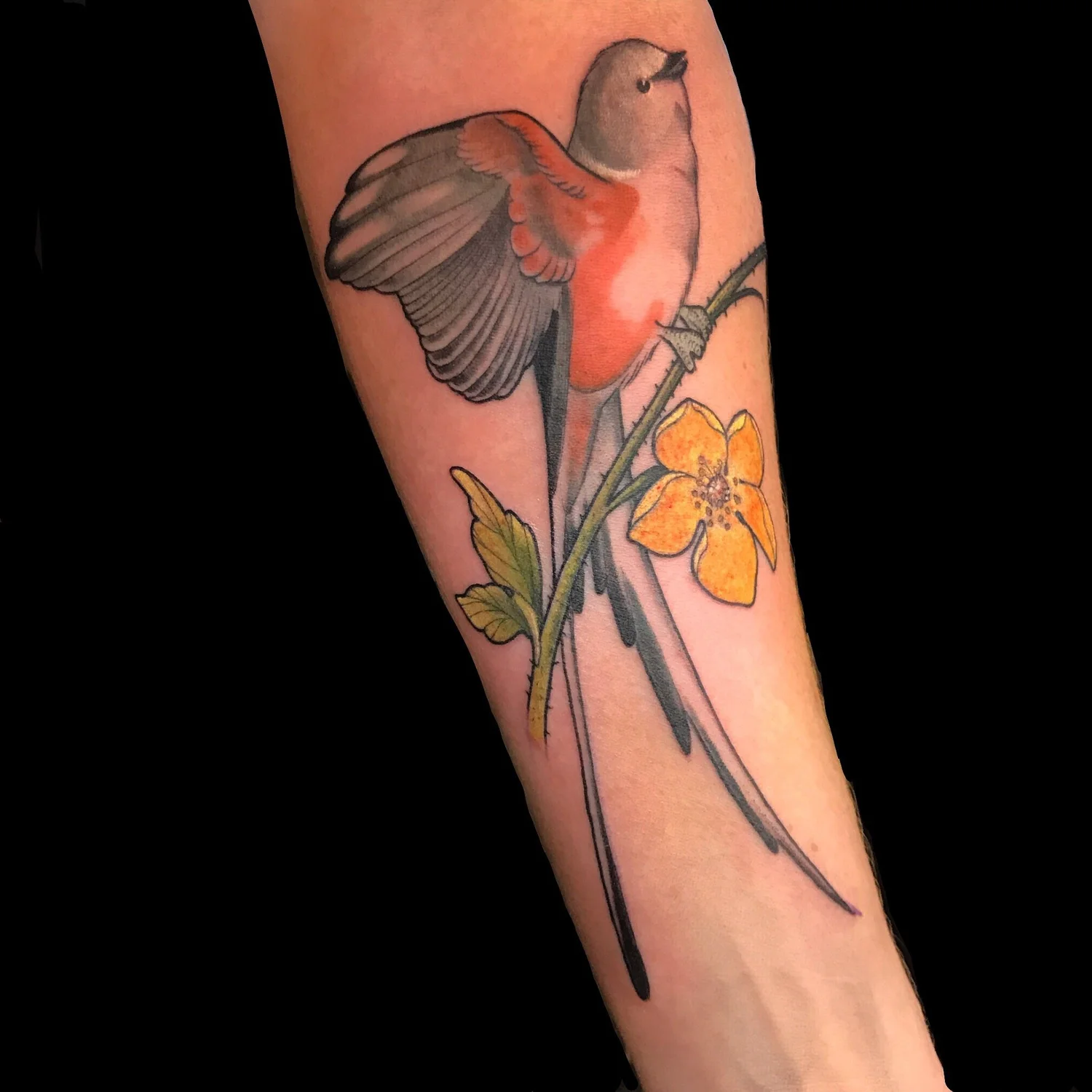
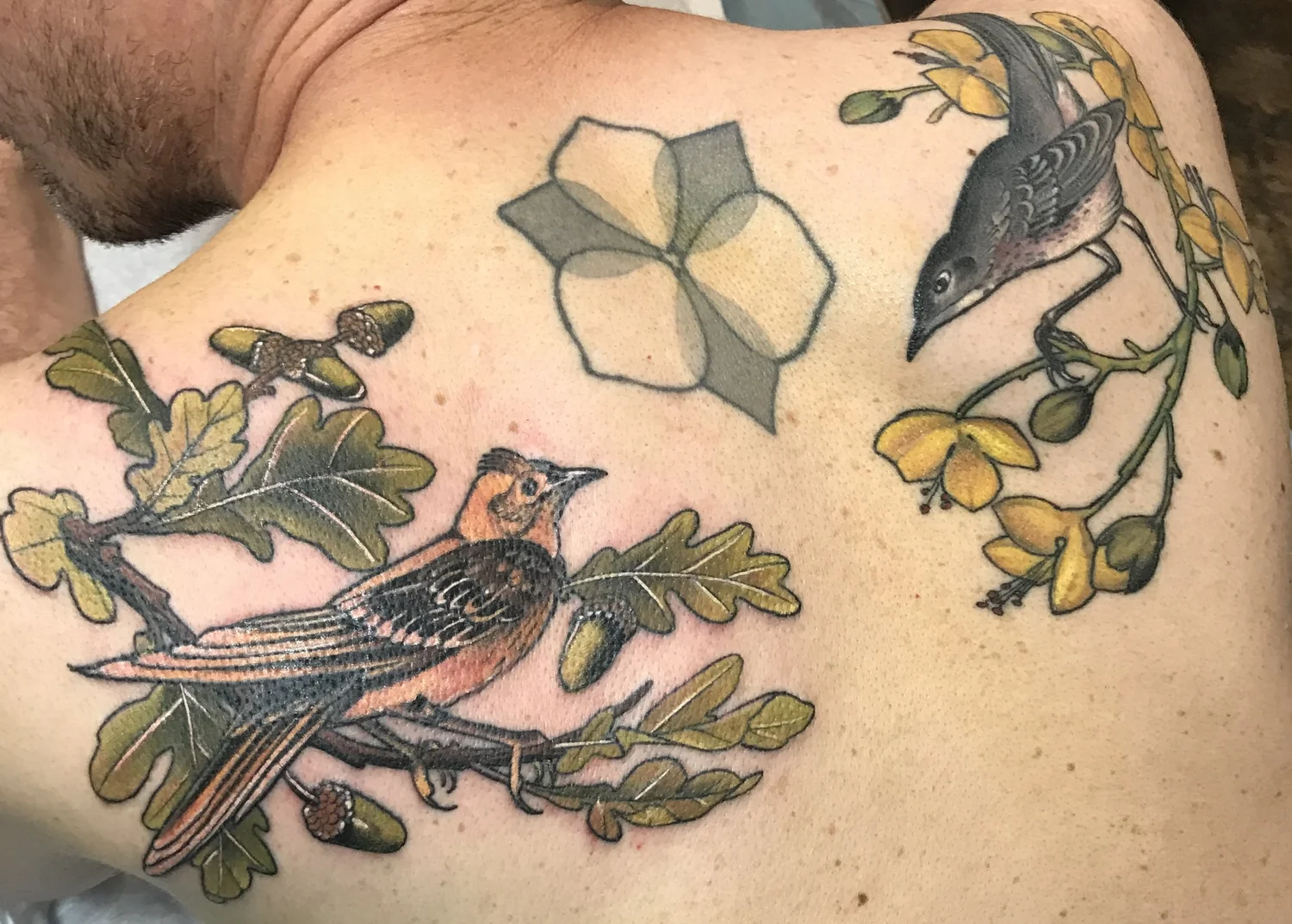
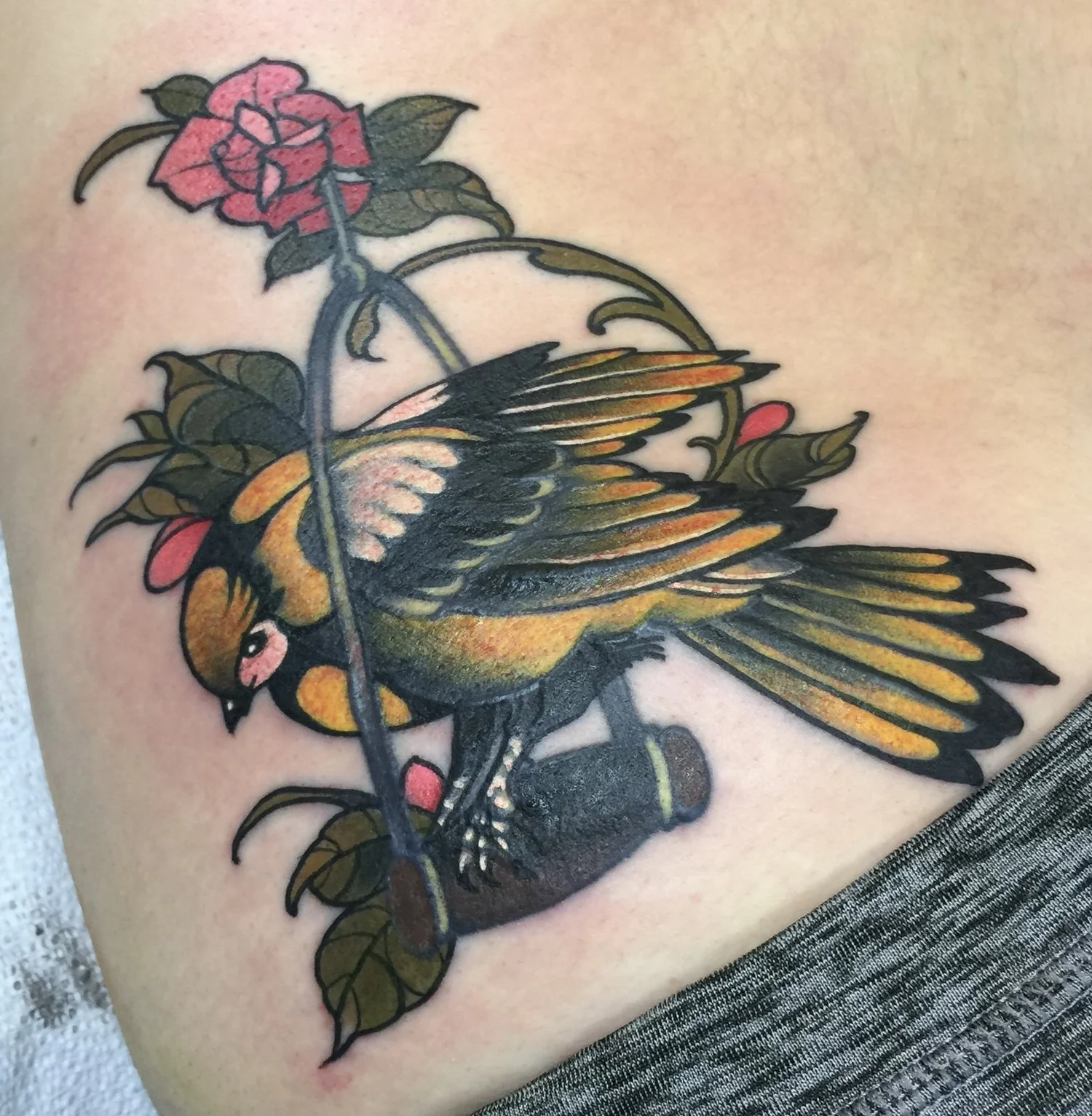
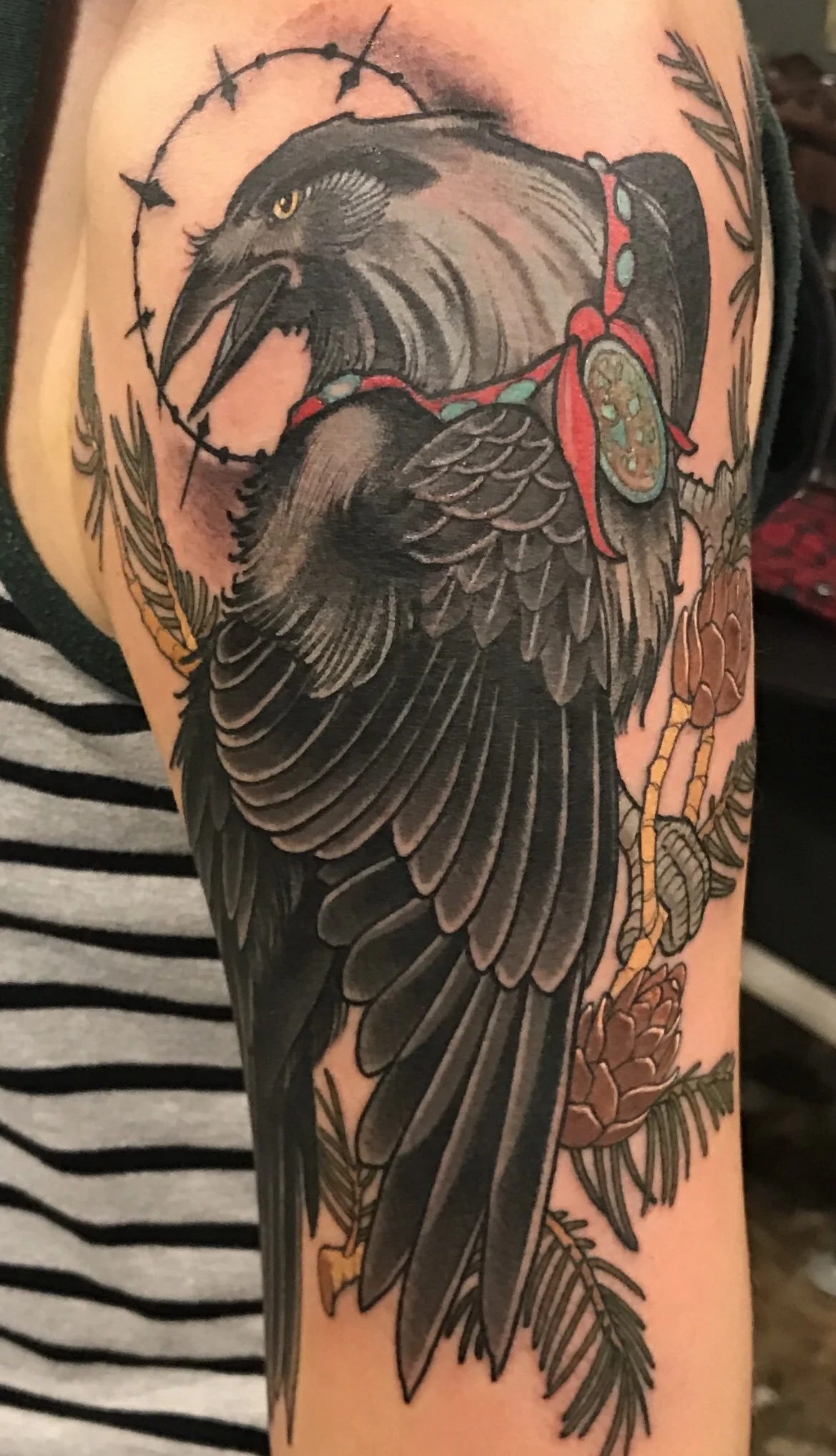
I’ve always loved tattooing birds — not just because my last name is Swan, but because there’s something endlessly fascinating about wings. The way they fold, layer, and move through space gives them so much depth and life. Every feather tells a story of motion, freedom, and transformation. Birds are a perfect balance of structure and grace — which makes them not only beautiful to tattoo, but incredibly versatile.
They also happen to make some of the best cover-ups you can do. The layering of feathers, the natural flow of wings, and the opportunity for bold color and movement allow me to completely reinvent a space on the body. When you need to erase or evolve an old tattoo, a bird — whether it’s an eagle, swallow, hummingbird, or something more exotic — is often the perfect choice. It’s symbolic of renewal, rebirth, and rising above the past — exactly what a good cover-up should represent.
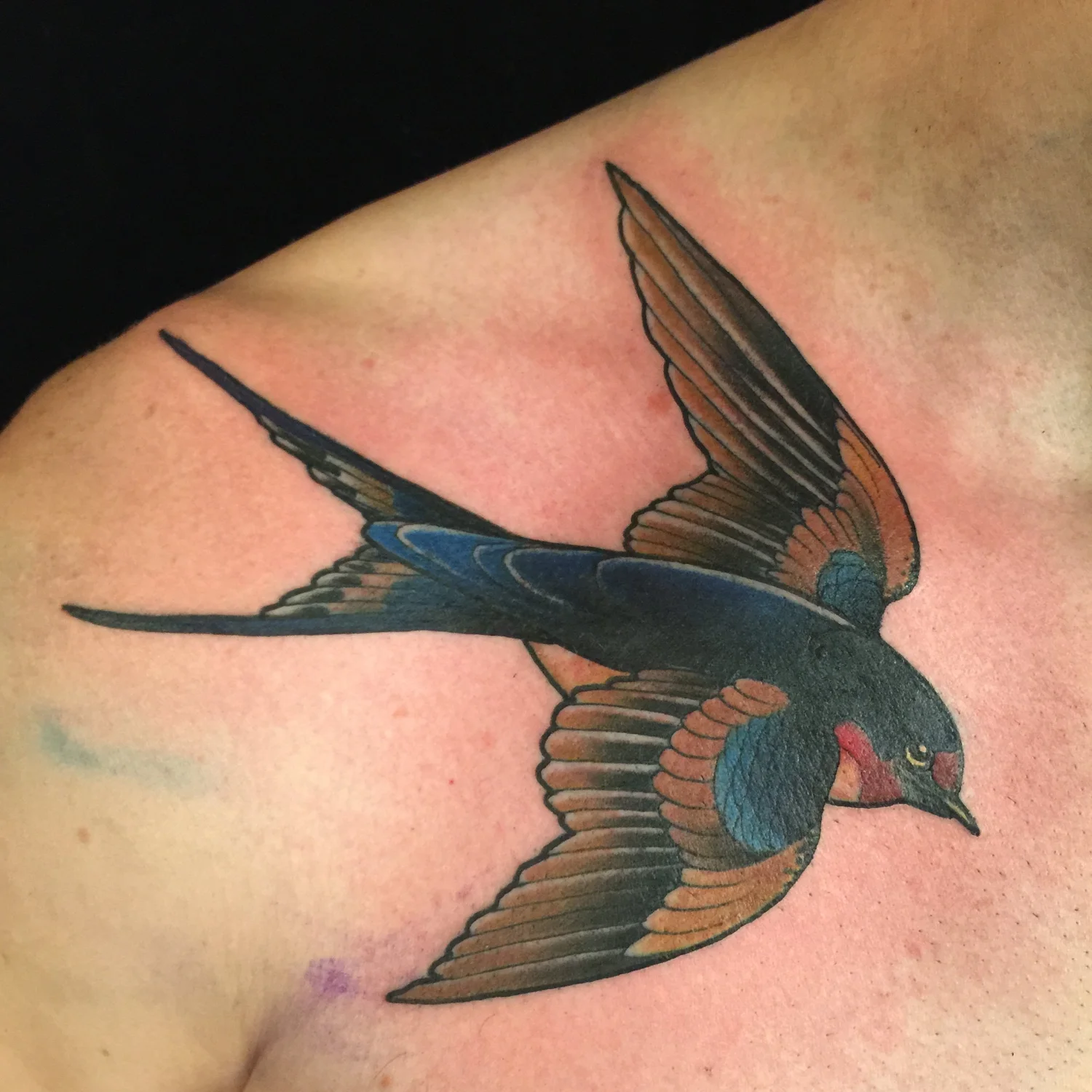
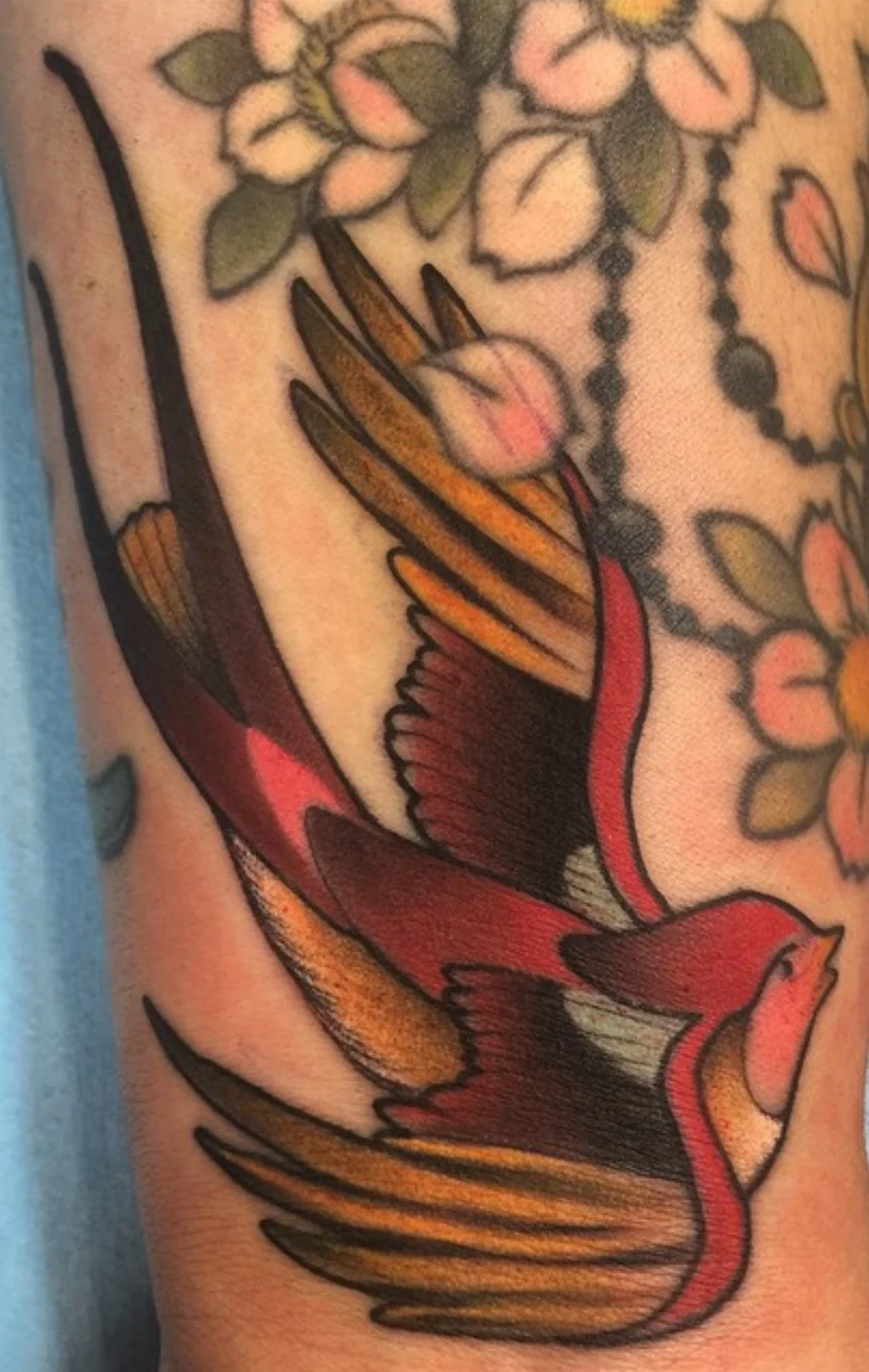
Swallows & Sparrows — The Return Home
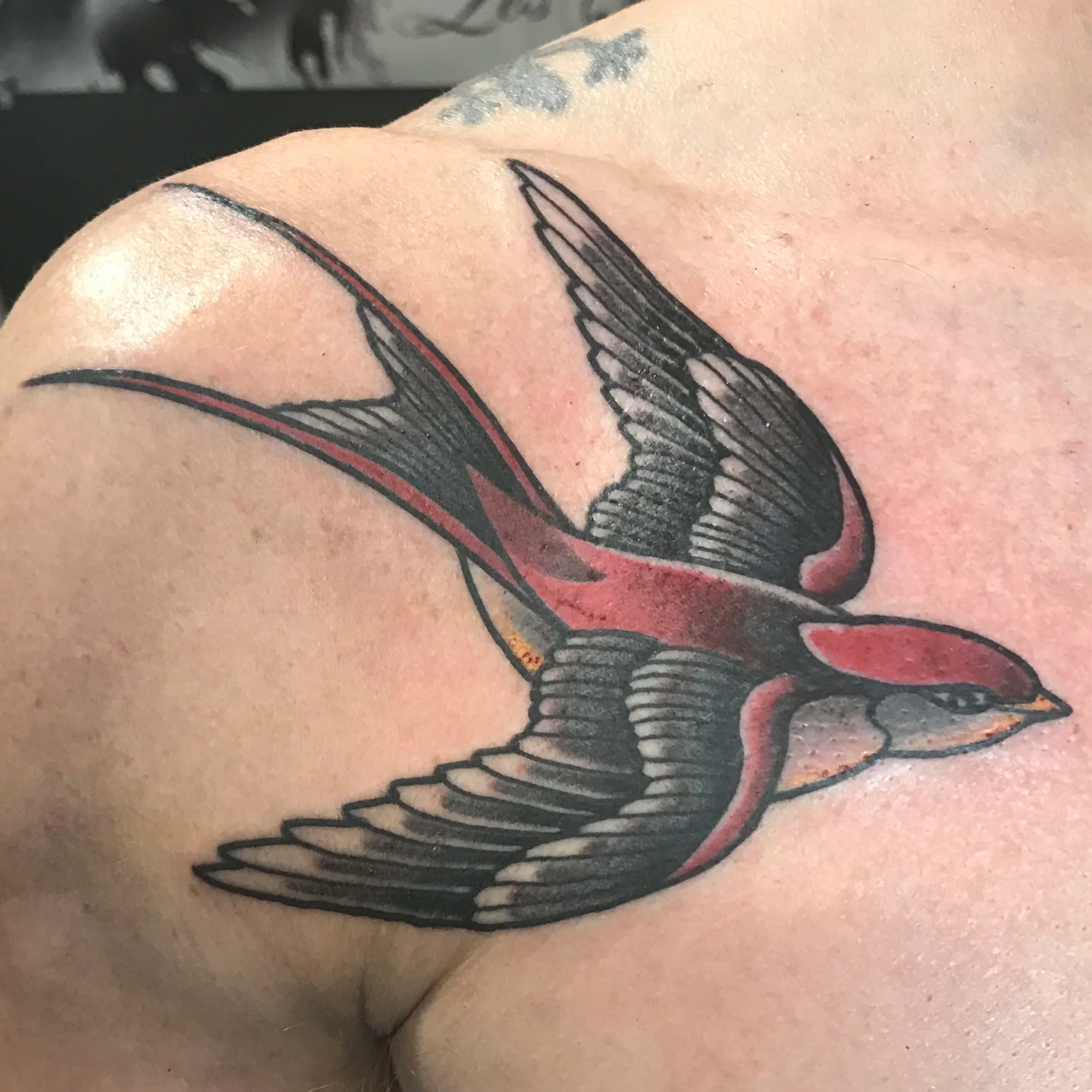
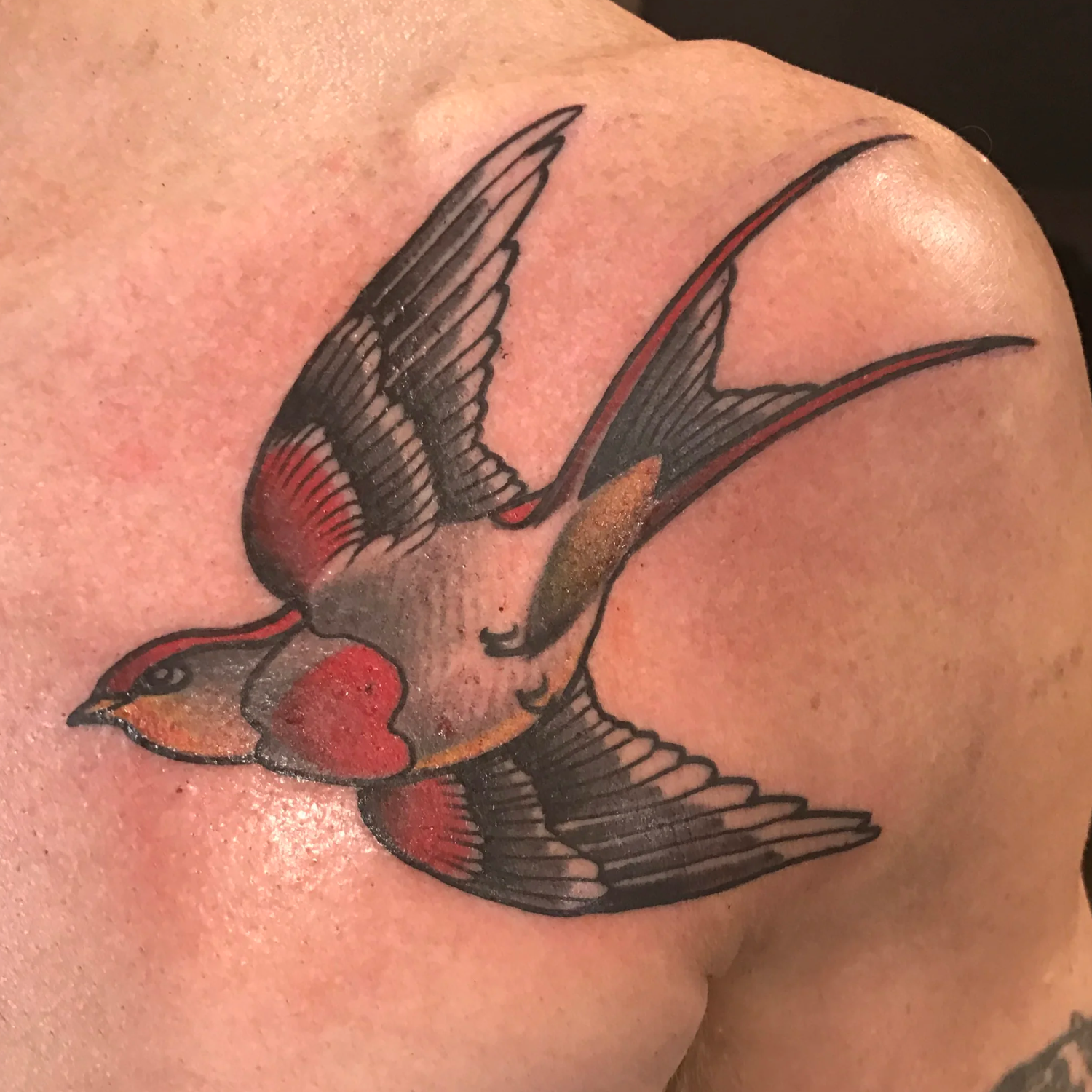
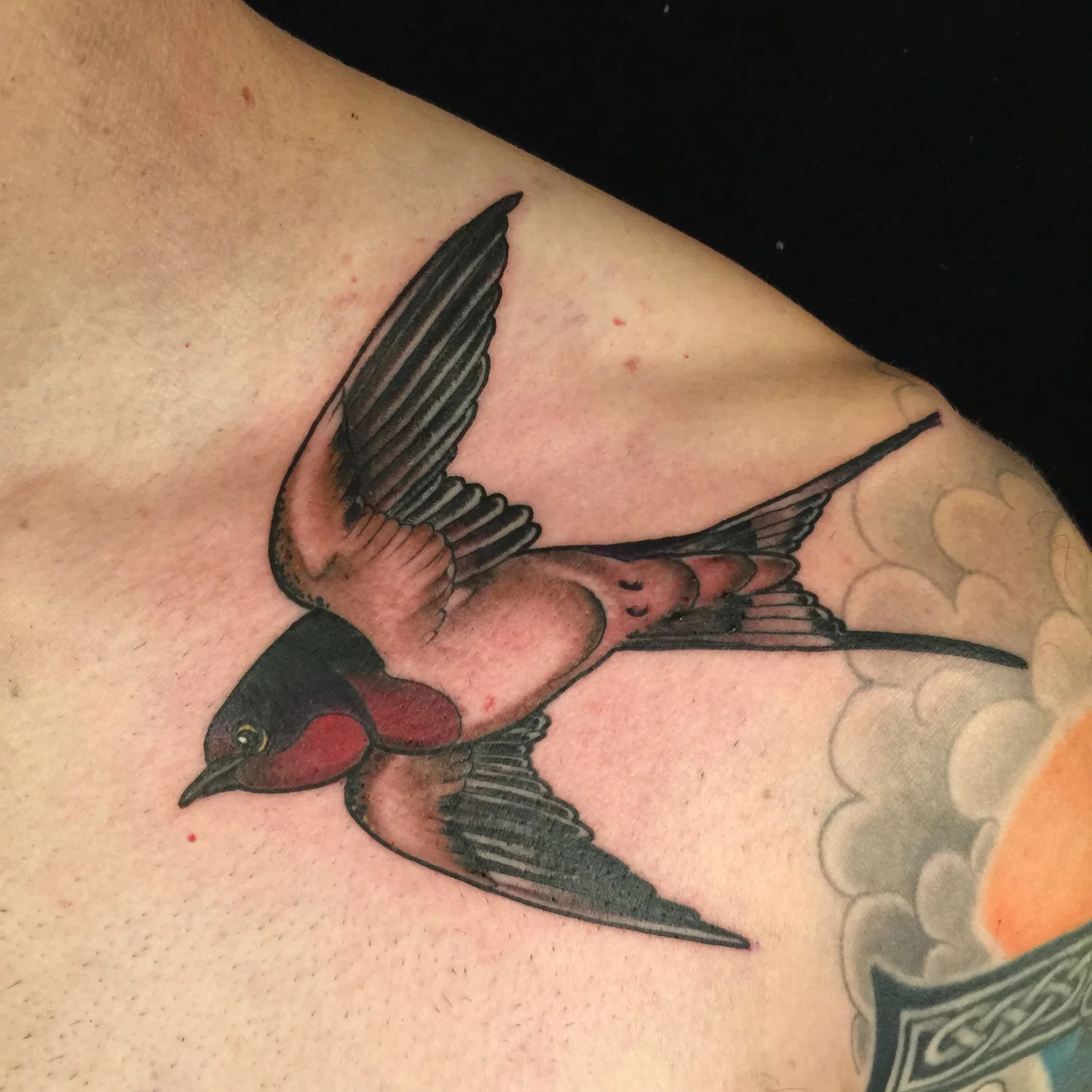
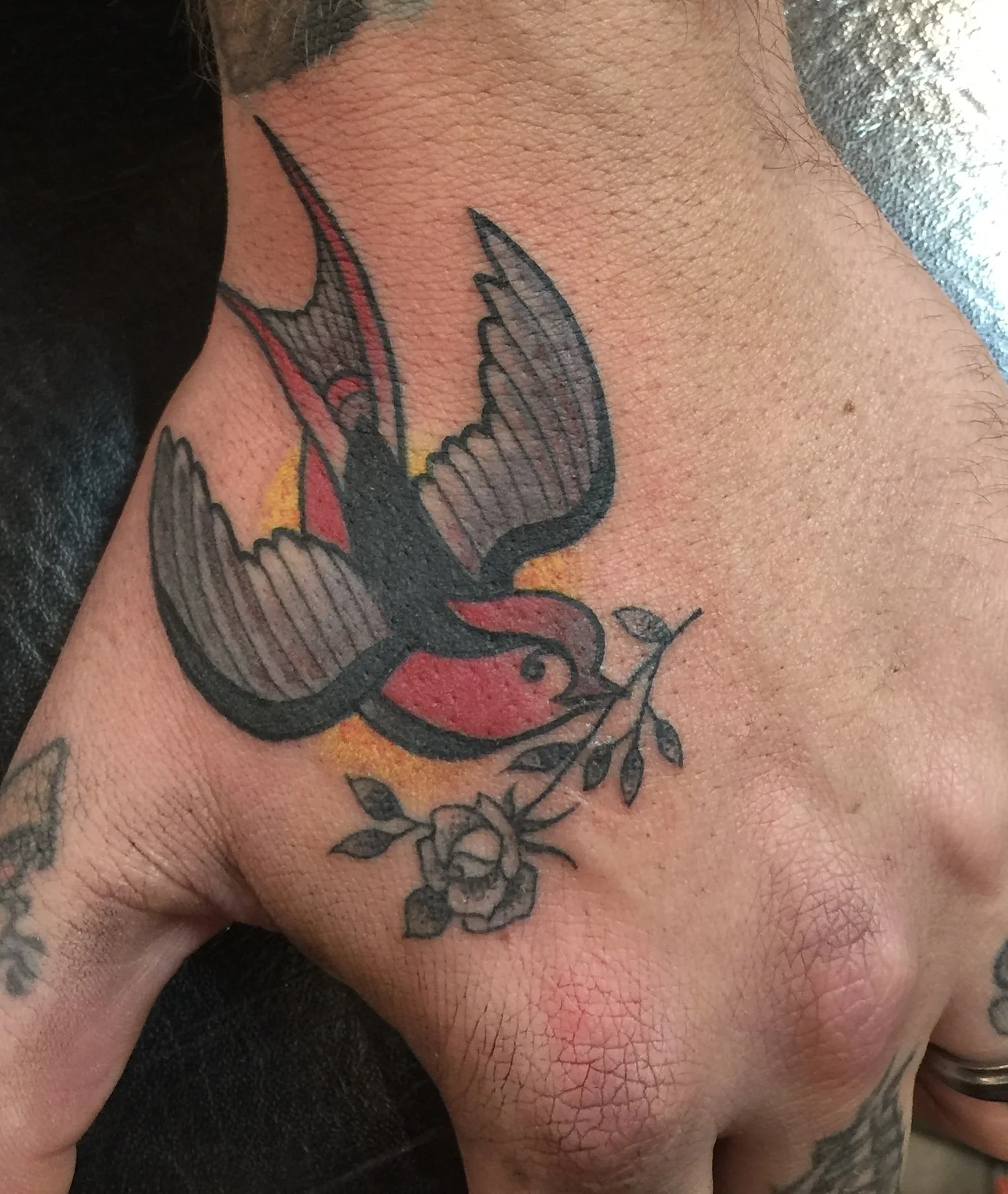
Neotraditional swallowNeotraditional swallow
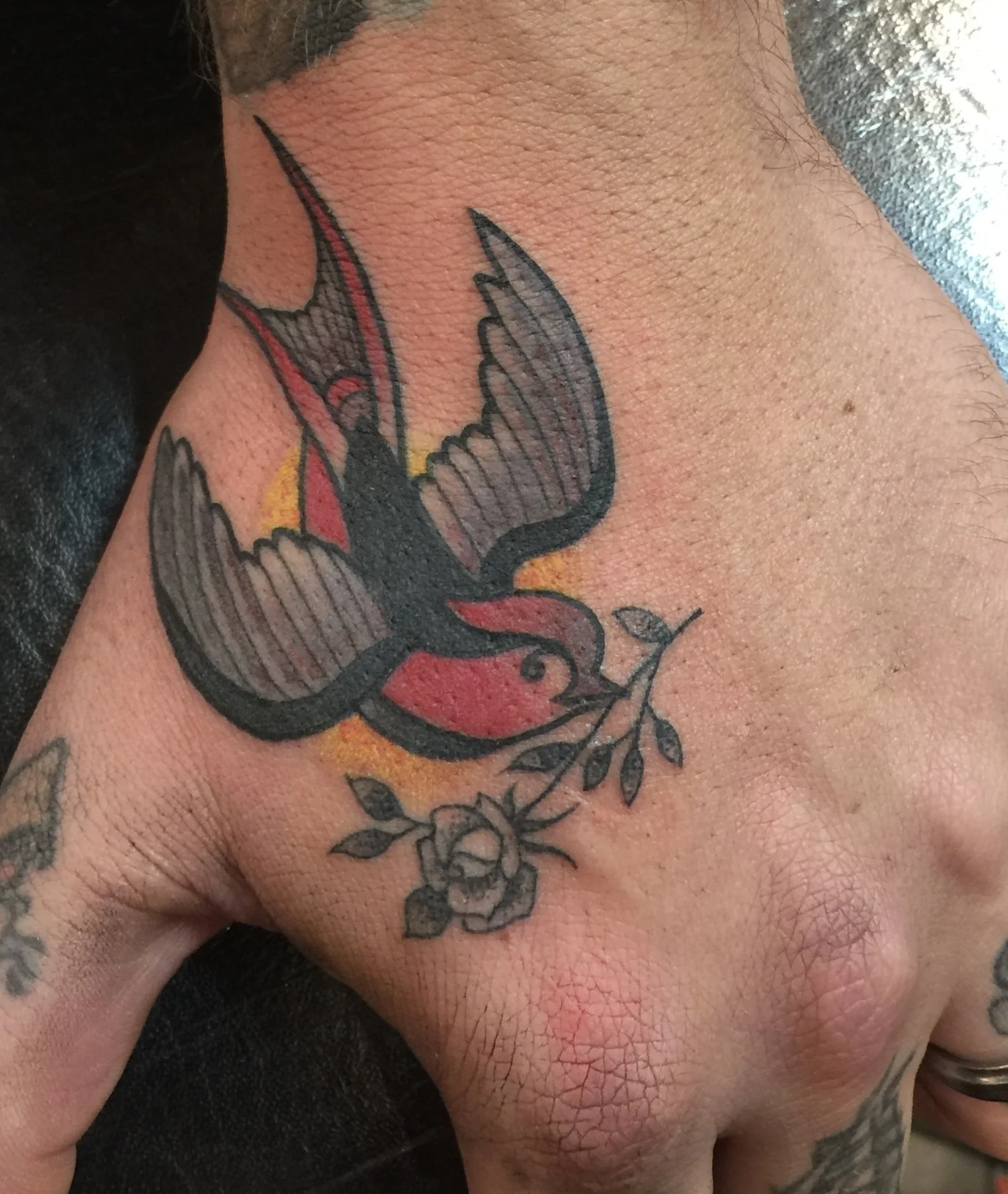
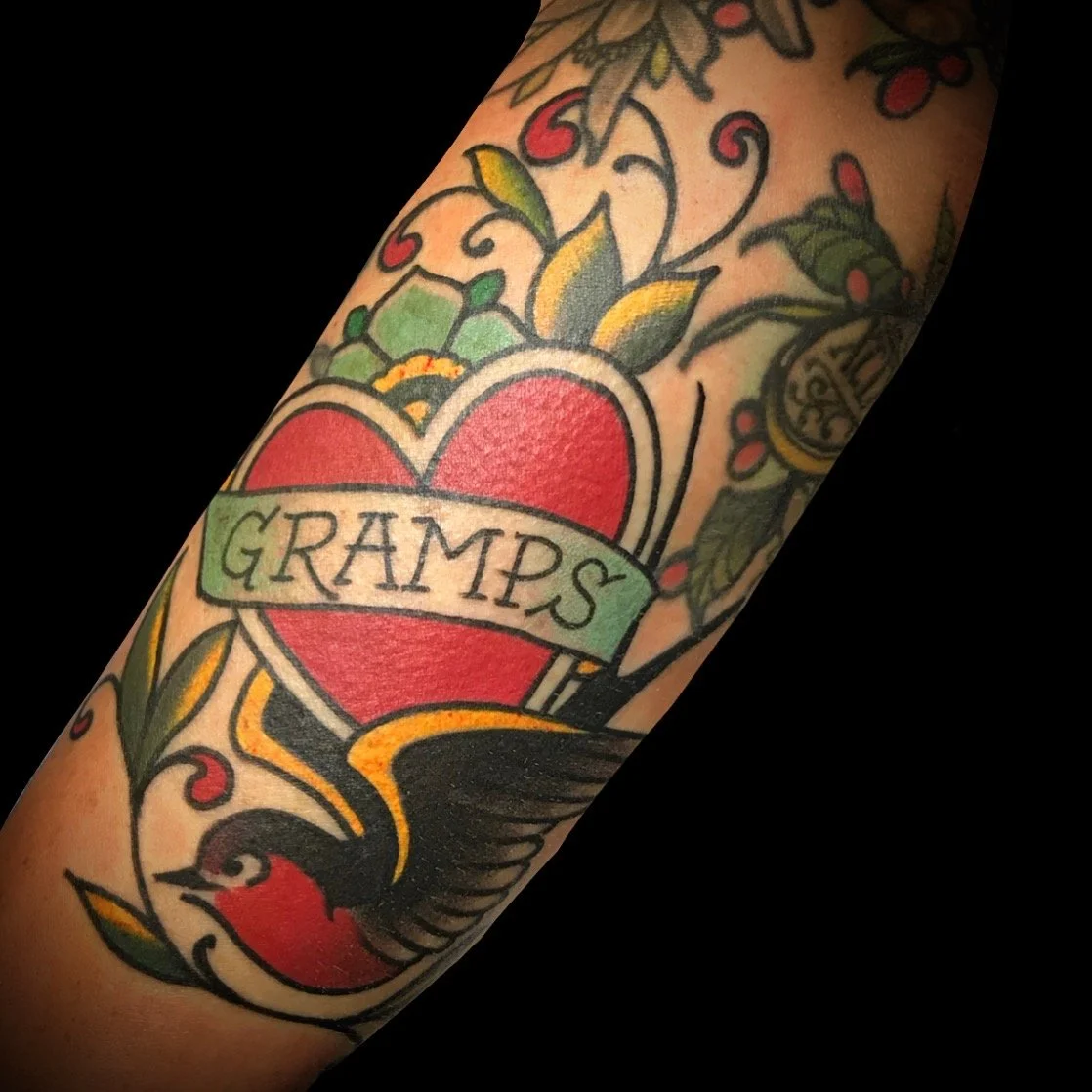
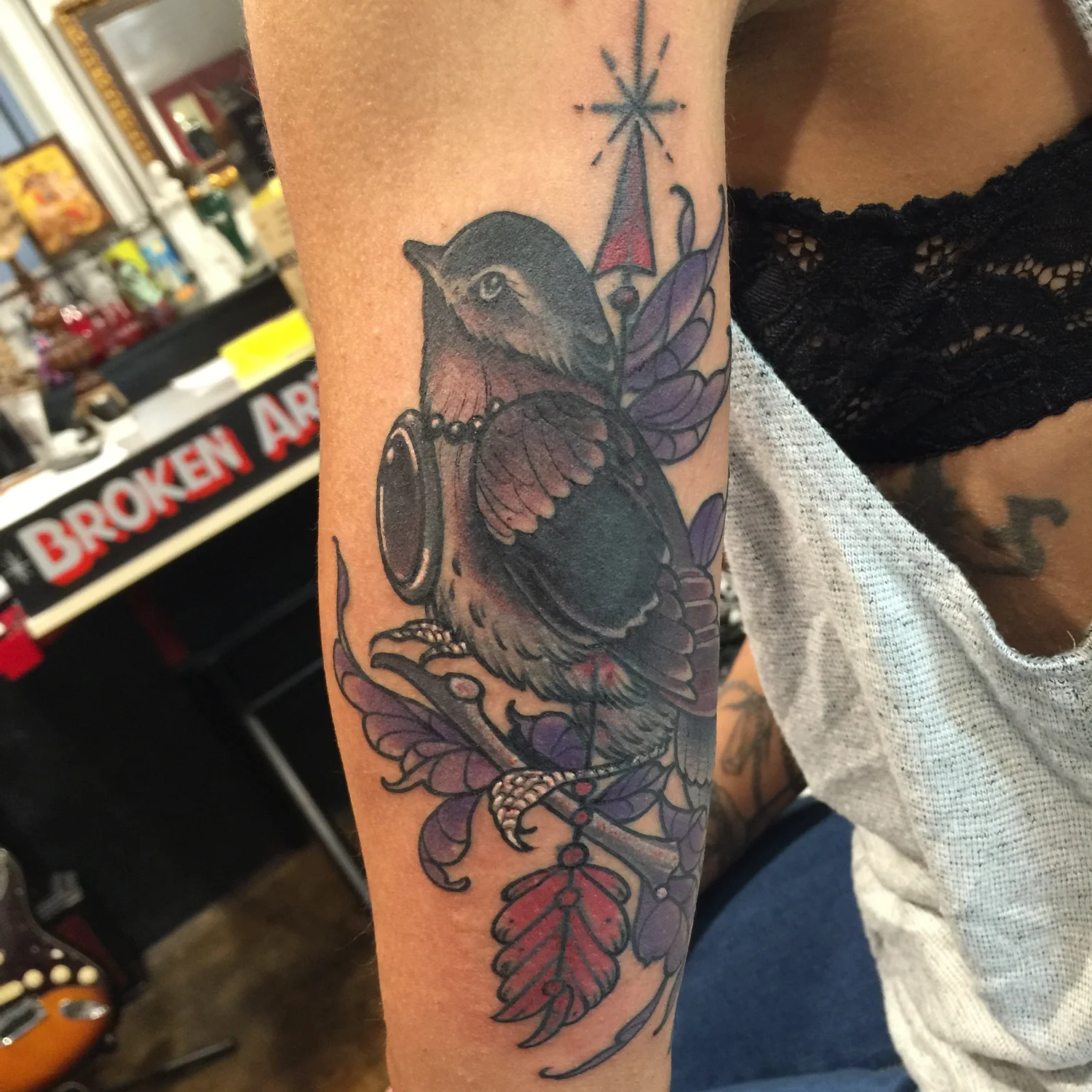
Classic swallow tattoos, like the ones sailors wore, are some of the oldest motifs in traditional tattooing. They symbolize safe return, loyalty, and freedom — marking miles traveled and lives survived.
In these designs, the bold outlines and limited color palette are intentional — a nod to American Traditional style. You’ll notice in my work that I take a modern approach to traditional tattooing, adding a bit of delicate line work or using a more organic and natural shape of the bird while still maintaining a traditional approach. These tattoos age beautifully because they’re built to last. The simplicity in linework and color keeps them striking and readable decades later. They represent resilience, devotion, and the spirit of adventure — all wrapped up in one small, powerful bird.
Hummingbirds — The Spirit of Resilience
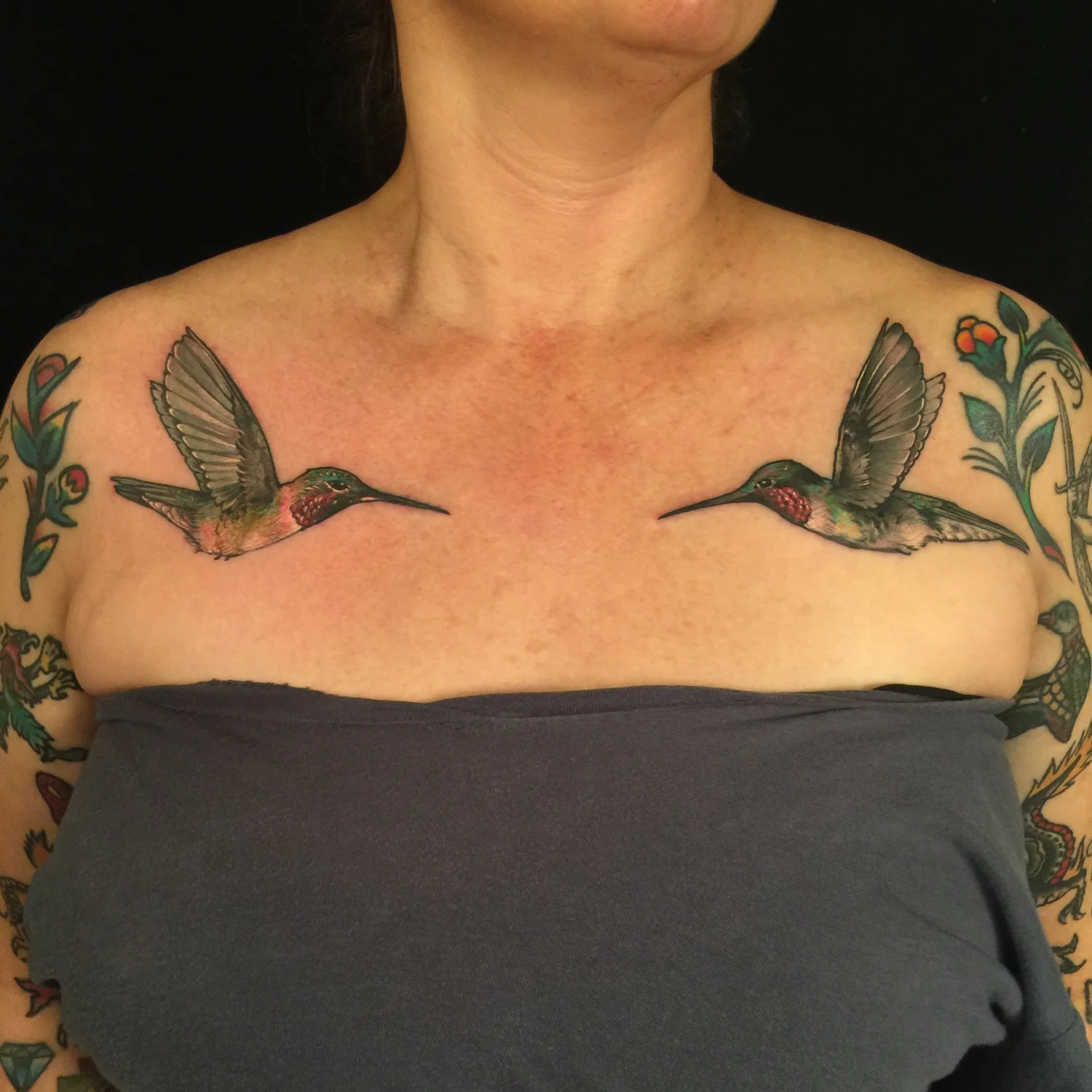
Hummingbirds done with an element of realism
Hummingbirds are pure motion — tiny hearts beating faster than you can see. In tattoo form, they represent joy, endurance, and the will to keep moving forward. They’re also deeply symbolic of healing and balance, hovering between fragility and strength.
When I tattoo hummingbirds, I often lean toward a more elegant and realistic style to capture their iridescent glow and delicate anatomy. They’re light, alive, and full of emotion — and that makes them just as beautiful as they are symbolic.
The American Eagle — Freedom and Strength
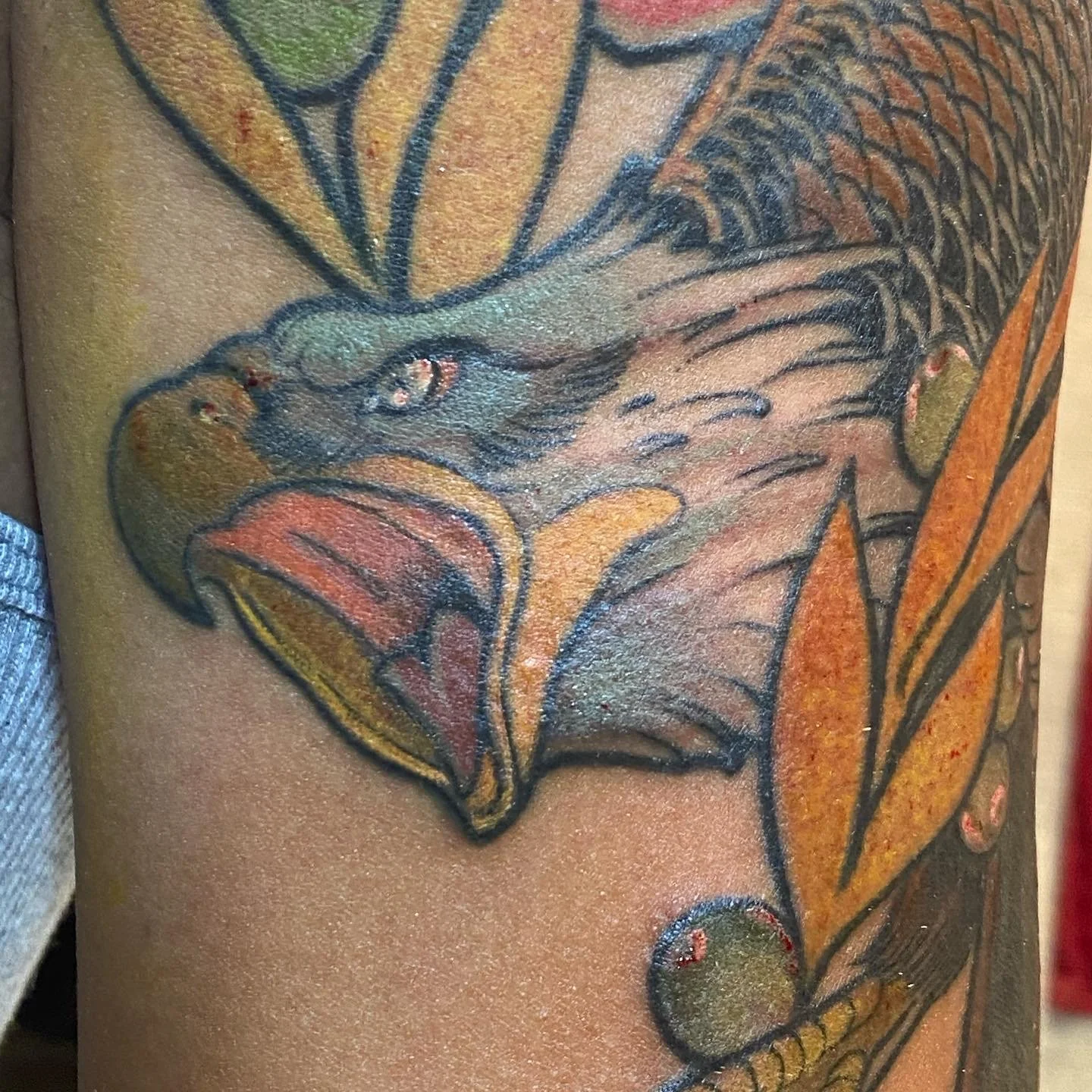
Few images are as iconic as the eagle. It’s been part of tattoo history since the early 1900s, carried by veterans, bikers, and patriots alike. The American Eagle symbolizes freedom, courage, and loyalty — both to one’s country and to one’s own sense of self.
In tattoo form, the eagle is pure power: wings wide, talons out, eyes locked. The bold geometry of traditional American tattooing gives it authority, while black-and-gray versions take on a more timeless, stoic feel. It’s a design that bridges eras — honoring classic flash traditions while embodying the independent spirit of modern tattooing. The eagle will always stand for strength, pride, and the power to rise above.
Screaming eagle
Hawks and Birds of Prey — Focus and Fearlessness
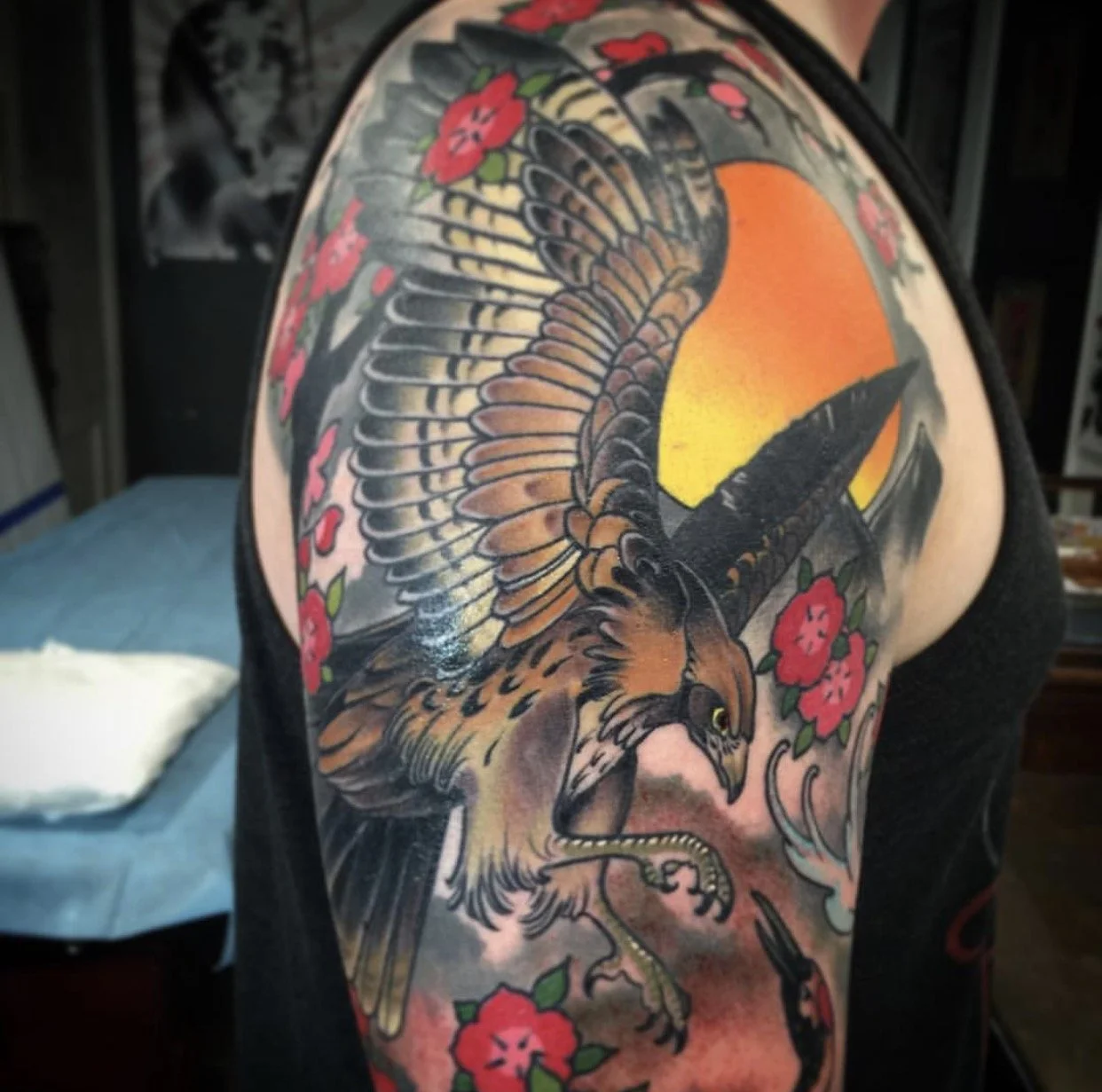
Powerful hawk with Japanese elements
Hawks, falcons, and other raptors are about precision and perspective — sharp eyes, sharp claws, and unstoppable drive. They symbolize dominance, vision, and the ability to strike when the time is right.
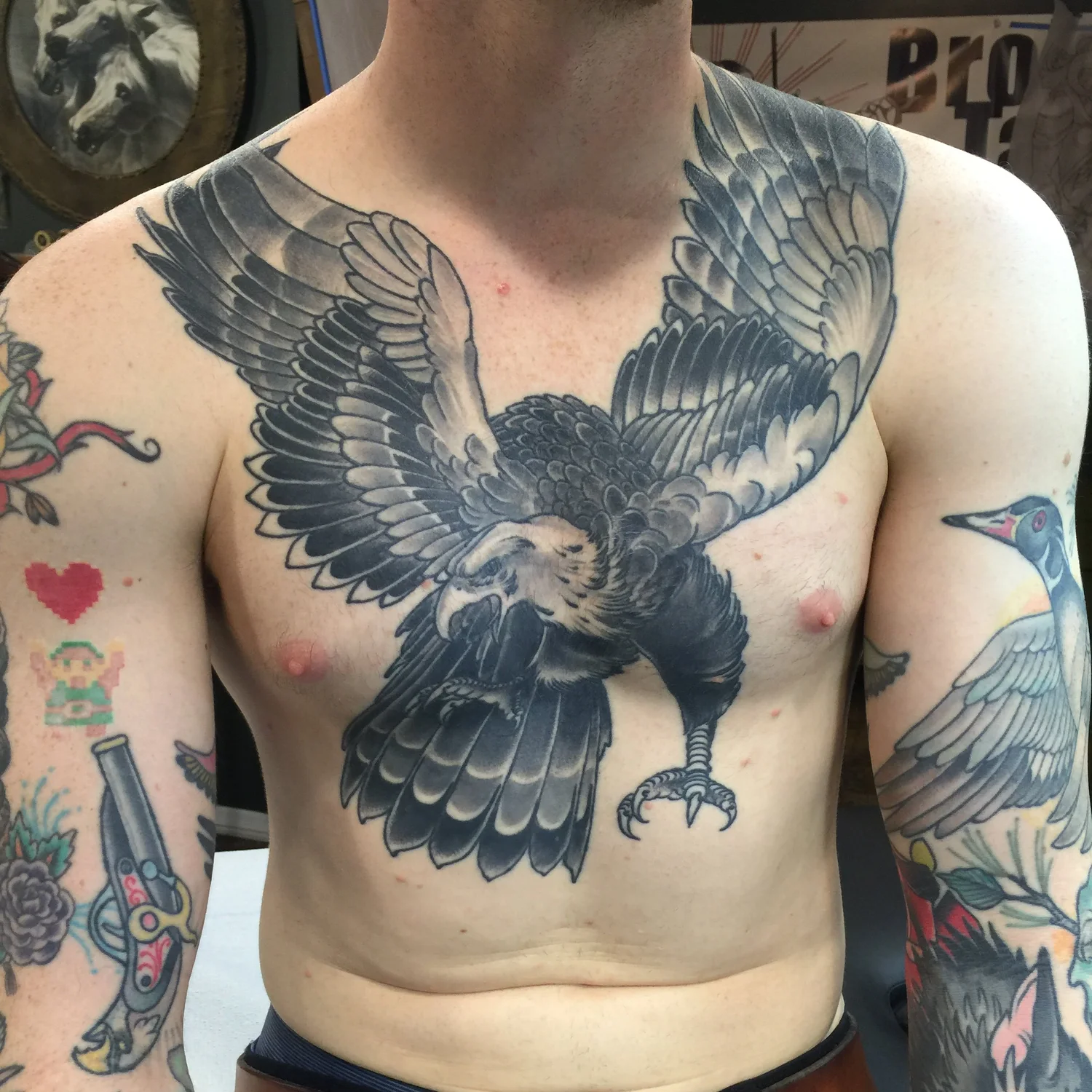
Artistically, these pieces often blend neotraditional and hyper-traditional styles, combining bold outlines with painterly gradients and dramatic movement. The result is something that feels alive — wings spread, talons reaching, a moment frozen in flight.
Black and gray full frontal hawk
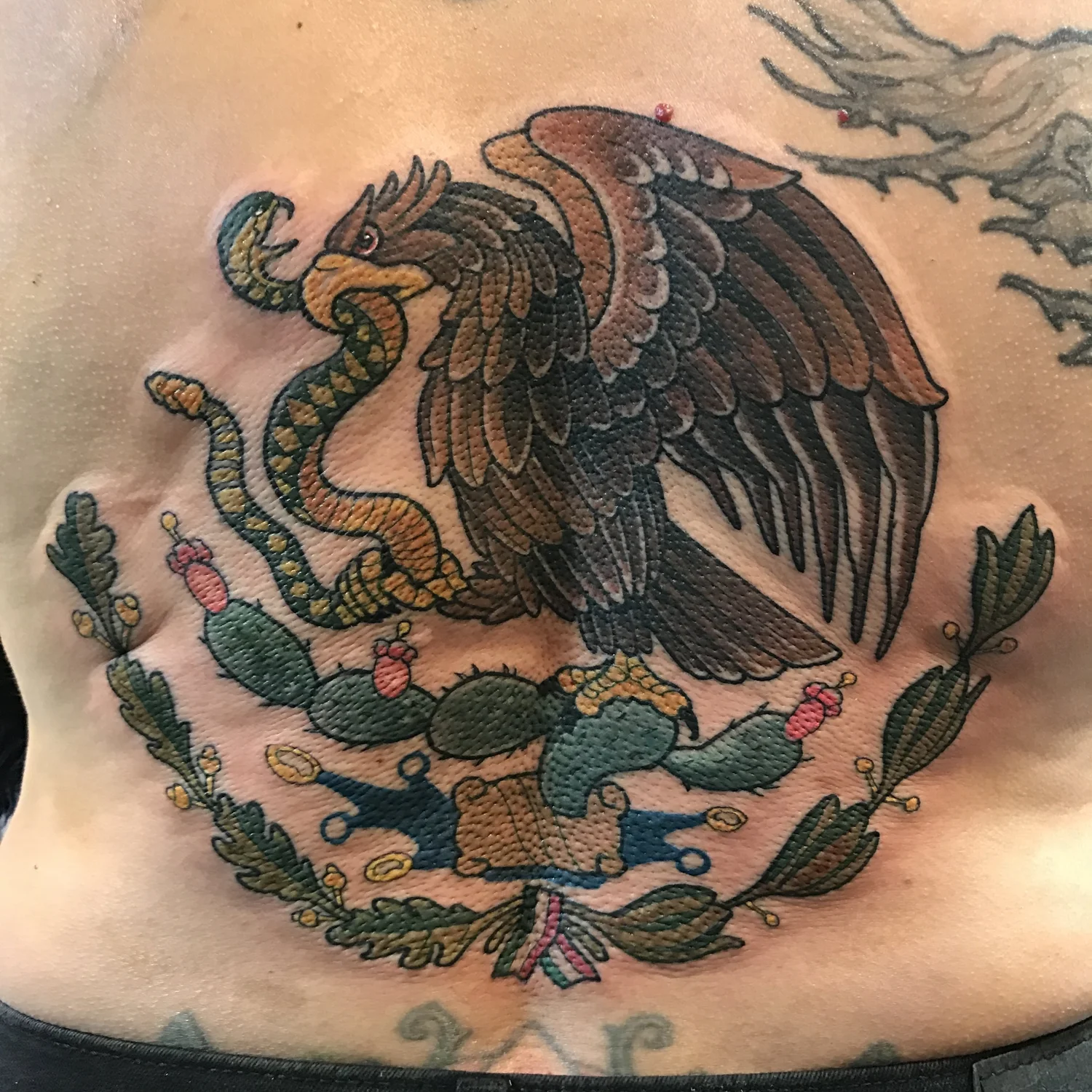
The Mexican Eagle — Heritage and Honor
Traditional Mexican flag coat of arms
The Mexican coat of arms — an eagle devouring a serpent atop a cactus — is more than just an image. It’s identity, ancestry, and strength. It represents triumph over adversity and the deep cultural pride that connects generations.
Rendered with bold lines, textured feathers, and deep, earthy tones, this kind of tattoo honors both Chicano tattoo heritage and the national symbol of Mexico itself. It’s storytelling in motion — a living emblem of courage and resilience.
The Bluebird — Hope and Heartbreak
No bird carries more quiet emotion than the bluebird. It’s long been a symbol of happiness, hope, and the freedom to be yourself — but there’s always something tender about it too. Bukowski’s famous bluebird poem captures that perfectly: it isn’t just about joy — it’s about the softness we hide beneath our armor. A bluebird tattoo often reflects that inner light we protect — the part of us that still believes in love, wonder, and the possibility of flight after heartbreak.
Different Wings, Same Sky
Every bird tells a story — not just of flight, but of what it takes to lift off. Whether it’s a swallow carrying the spirit of home, a hummingbird balancing beauty and endurance, or an eagle breaking through the clouds of adversity, each one speaks to our shared longing for freedom.
Across styles — from bold American Traditional to fine-lined realism — bird tattoos remind us that strength and grace can coexist. They’re symbols of resilience, transformation, and the unbreakable will to move forward. Maybe that’s what every bird tattoo really is: that hidden bluebird inside us finally finding its wings.
October 30, 2025
Cover-Up Resurrection: From Regret to Masterpiece
by J. Swan, Broken Art Tattoo – Los Angeles
There’s something intimate, something raw, about stepping into that exact moment when someone decides they no longer want to wear the ghost of a bad tattoo. I’ve spent years doing this work — pulling the old, worn regret into the light, then building something new from those lines, those scars of ink. And yes: I took that skill all the way to the set of America’s Worst Tattoos.
My Time on the Show
When I walked into the studio for America’s Worst Tattoos, I already knew: this wasn’t just a TV moment, it was real life for someone. The bad job they’d lived with. The embarrassment, the hiding, the desire for something better. The show gave a platform to those stories — and gave me an opportunity to showcase what I do best: see into the old tattoo, follow its rhythm, and turn it into something badass.
Here’s an episode (10:51 in) that shows the kind of transformations I was doing:
You’ll see the before-wound of regret and the after relief. That’s what I live for.
How I Approach Cover-Ups
Most artists treat the old tattoo like it’s not even there, resulting in the old tattoo peering through the new one… but I don’t. I look into it.
I trace the old lines wherever possible — not because I’m copying them, but because they tell a story. They tell me where the ink ran thin, where the client’s regret is etched in skin.
I examine the old shading and texture: faded grey, sloppy gradients, scar tissue. I ask: can I utilize that value for a new dark component, a new shadow, a new flow?
Then I map the new piece: how does it flow on the client’s body? How does it hide the old and elevate the new? I design so the old tattoo becomes part of the composition — a hidden strength.
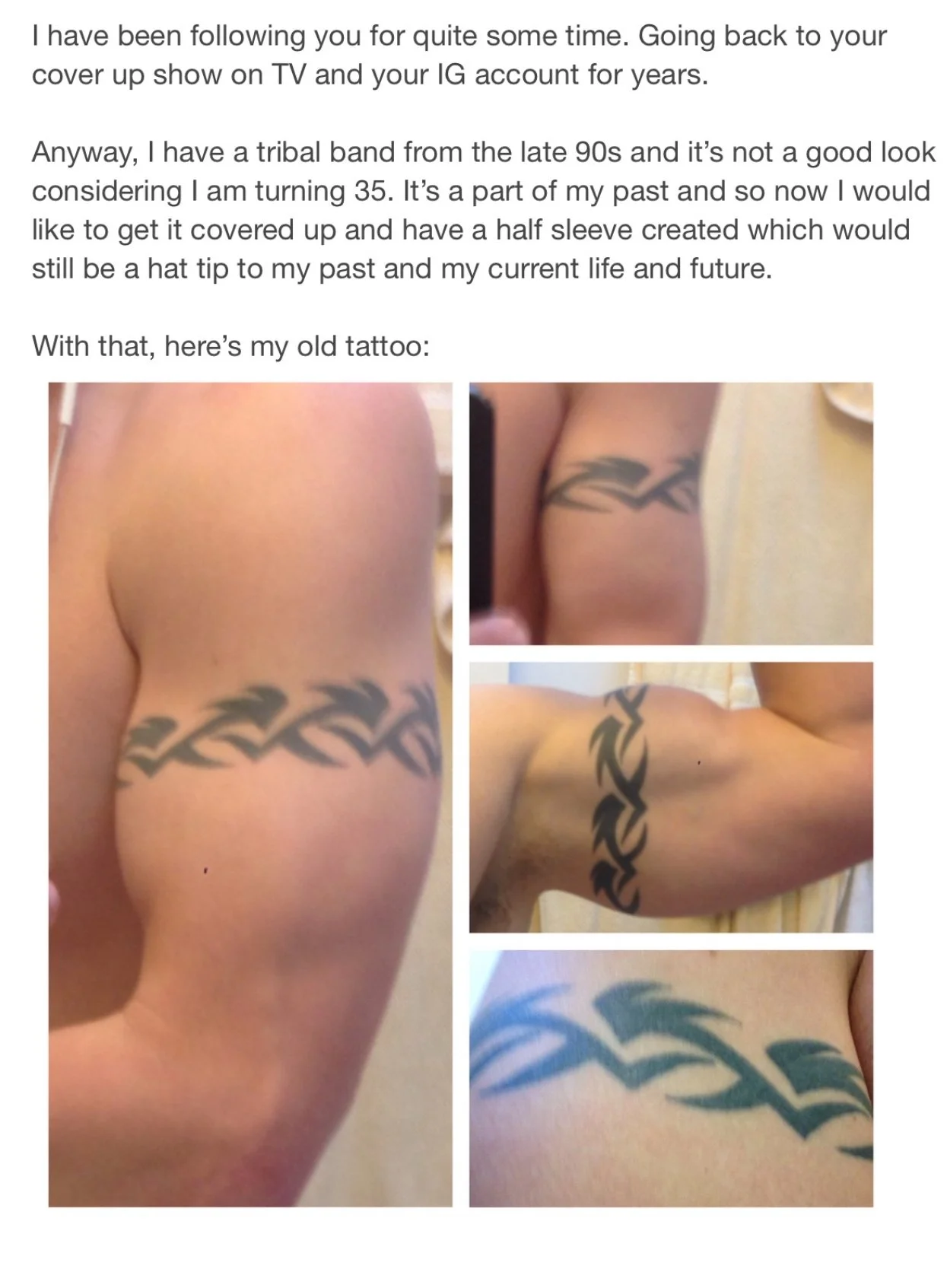
For example: I had a client with a faded tribal band that wrapped awkwardly around the bicep. It was dated and poorly executed. I traced the heavier line of the tribal band and used it as the motion for waves and water with a clipper ship sailing into the sunset — all in black and grey. The old band became the hidden “crest” of the wave, a structural anchor. The shading from the old ink contributed value under the water’s dark tones. What had been a mistake turned into a feature.
Here was the original email he sent me:
Old tribal armband that screams frat boys gone wild
What’s an artist to do? Let the results speak for themselves:
Why This Works
Respect for what’s there: the client isn’t just erasing their past — they’re reclaiming it. I show them the value of where they’ve been.
Efficiency: using existing ink and scar patterns means less work is wasted. I build on top of what’s there rather than constantly fighting it.
Artistic depth: the old tattoo gives me texture, variation, story. That’s gold. Most new pieces start from a white canvas. In cover-ups, the canvas is already scarred — and I love that.
My Studio Vibe at Broken Art Tattoo
Since 2005, Broken Art Tattoo has been about transforming skin into stories. In the heart of Atwater Village, Los Angeles, we’ve created a space where clients come not just for a tattoo, but for reclamation. The dude who got sloppy in his 20s, the woman who wants to hide the ex’s name, the collector whose old work doesn’t reflect who they are anymore — I see them. I listen. Then I ink.
When you walk through our doors you’ll hear the hum of the machines, see the art on the walls, feel the hustle of L.A. culture. But you’ll also feel the quiet of someone who’s about to wear something that means something new. That’s the moment I live for.
Ready for Your Cover-Up?
If you’re sitting there looking at your reflection thinking “I wish that tattoo never happened” — don’t. Let’s turn it into something that does happen. Send me a photo of your old piece and tell me the story you want now. I’ll see the old lines. I’ll see the shading. I’ll see the art buried in regret. Then we’ll design something that sets you free.
Book your consultation at Broken Art Tattoo. Let’s reclaim your skin and write a new chapter. Text me today: 323-612-7886.
May 28, 2019
Tribal Redemption: From Blackout to Tibetan Dragon
What started as a solid black half-sleeve and chest panel of old tribal work became one of the wildest cover-up transformations I’ve ever done. This kind of project takes time, patience, and precision — and it’s all about trusting the process.
To conquer a full-black tribal piece, you’ve got to start with bold, confident linework. I map new structure right over the old — Tibetan skull outlines, dragon flow, background motion. Then I add strategic shading to break up the solid black. This is where the old tattoo starts losing power and the new form begins to emerge.
Here’s where the magic starts happening. I use a white-out pass over the old black ink, layering titanium white directly into the dark fields. That step creates an opaque barrier and opens the door for future color. It’s not instant gratification — the skin needs about a month to heal before we can go back in. But this move is the secret weapon that lets me transform blackout tribal into color realism.
Once the skin’s ready, I dive back in for the final pass — complete color saturation. The Tibetan skull explodes to life, the dragon coils across the chest, and the original tribal is gone — absorbed, transformed, reborn. It’s an insane cover-up that proves no tattoo is too dark or too far gone when you’ve got the right vision and patience.
This is what I love about cover-ups: it’s not about hiding the past — it’s about rebuilding from it. Every line, every shade of black, every scar becomes part of the story.